Major Safari Regions
Available Lodges
Peak Season
Price Range (per person)
With a direct flight from London, under nine hours, lands you in Nairobi with a safari infrastructure refined over six decades. Seven distinct safari regions span everything from the Masai Mara’s big cat density to the rhino sanctuaries of Meru and the red-soiled elephant herds of Tsavo. We've been back repeatedly and there is still lots to uncover. For families, honeymooners and first-time safari travellers, Kenya offers the widest range of lodge styles, activity types, and price points of any East African destination.
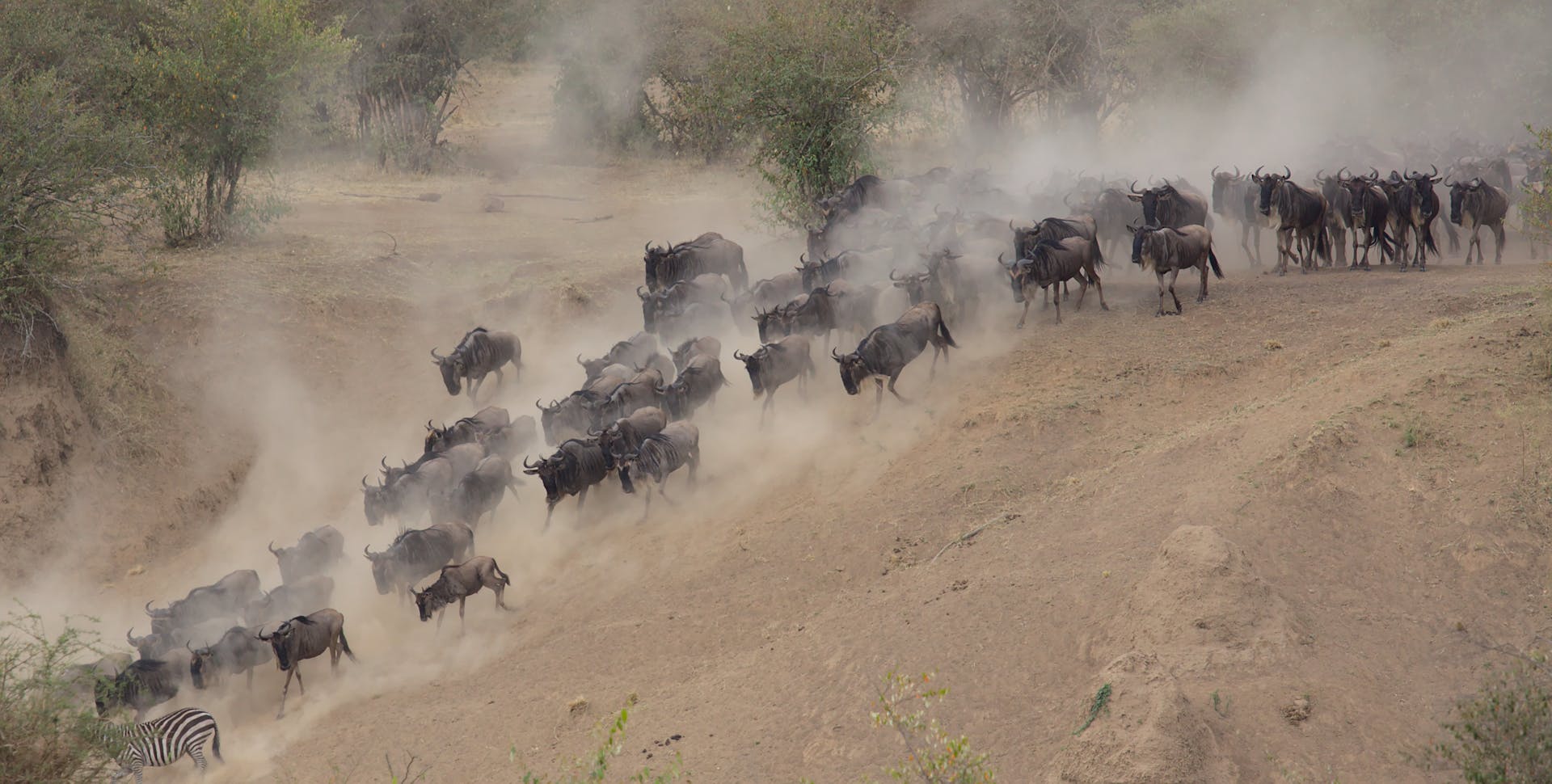
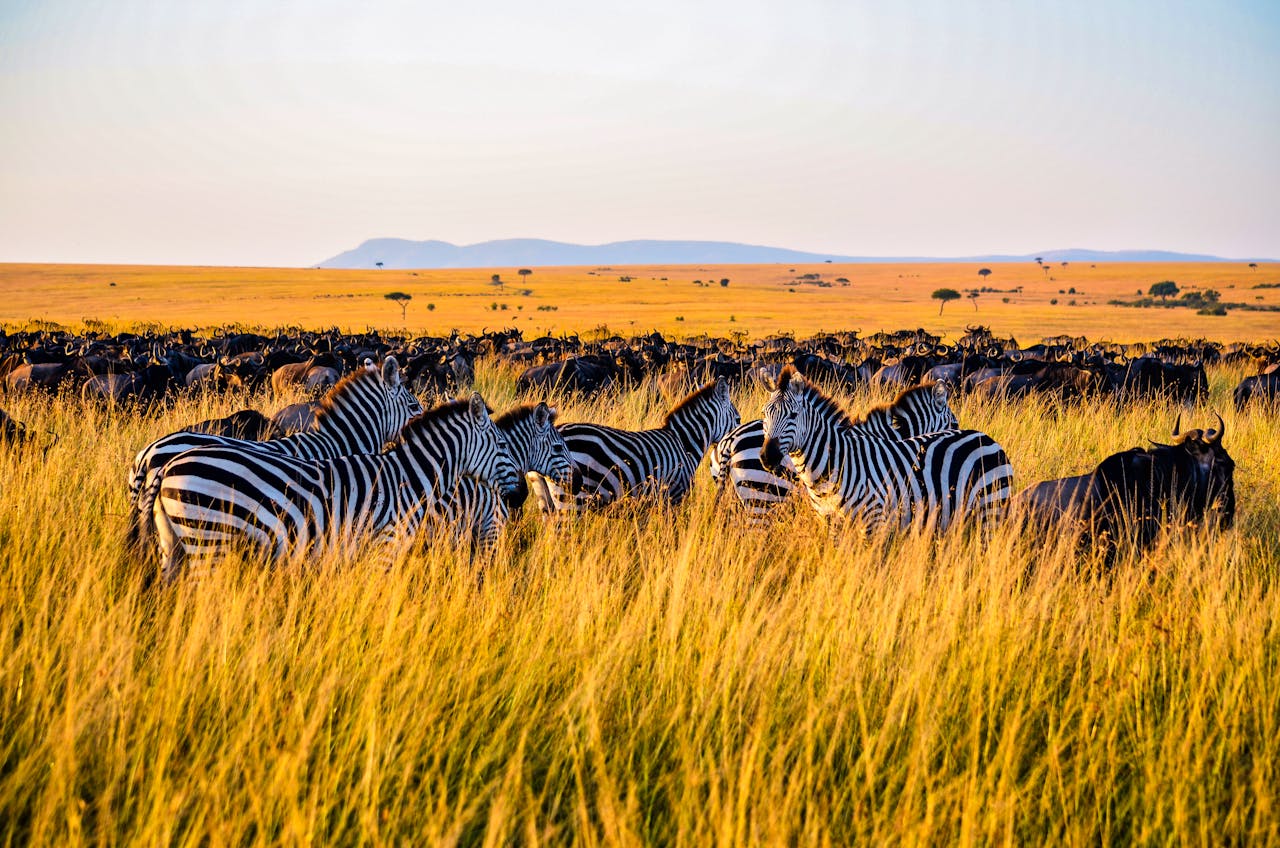
The short answer: Kenya works almost all year-round, but July to October is peak season for a reason. The Great Migration is in the Mara during these months, vegetation is low and animals concentrate around water sources. This is also when prices are highest and conservancy camps book out 6–12 months ahead.
January and February are the most underrated months. The Mara’s resident wildlife is still excellent, the light is extraordinary for photography, and you will typically pay 20–30% less than peak season rates.
Green season (April–May) brings rain, lush landscapes, and newborn animals but some camps close entirely. November and early December offer a sweet spot: short rains, lower prices, and calving season on the Mara’s southern plains. Late December into the first week of January see peak pricing again however.
For families constrained by school holidays, the July–August summer break aligns with peak migration. October half-term catches the tail end. Easter falls in green season — Laikipia and Samburu are better bets than the Mara during this period.

Kenya offers a wide variety safari formats. Standard game drives in open-sided 4x4s operate across all regions.
Walking safaris are available in most Laikipia conservancies and in some of the Mara’s private conservancies - minimum age is typically 12–16 depending on the property.
Fly-in safaris connect Nairobi to bush airstrips in 60–90 minutes, eliminating long road transfers. Hot air balloon flights over the Mara operate year-round at around $450–$650 per person.
Horse riding safaris are available at properties like Ol Malo and Offbeat Riding Safaris in Laikipia.
Night drives are only permitted in private conservancies, not in the national reserves.
A Safari Circle Kenya itinerary typically costs £6,000–£15,000 per person for 7–12 nights. That includes accommodation on a full-board basis, conservancy fees, game activities, internal bush flights, and airport transfers.
Not included: international flights, travel insurance, the Kenya eTA and gratuities.
Peak season (July–October) commands a 25–40% premium over shoulder months. Conservancy properties cost more than national reserve camps, but include activities (walking, night drives, bush meals) that reserves do not permit. They also cap vehicle numbers per sighting when inside the conservancies which can be a welcome relief to the overcrowding you can sometimes see in the national reserves.
Not sure which safari style suits you? Your Safari DNA profile matches your instincts and priorities to the right regions and properties before a single itinerary is discussed.
Kenya suits a wider range of safari travellers than any other single destination.
Families with teenagers: Kenya’s private conservancies offer walking safaris and bush skills programmes that give 12–17 year-olds a qualitatively different experience from a game drive.
Honeymoon couples: A Mara safari paired with Diani Beach or Lamu delivers both adventure and downtime in a single country, avoiding the Kenya–Tanzania border logistics.
First-time safari travellers: Direct flights, established infrastructure, and the Mara’s reliable game viewing make Kenya the lowest-risk entry point.
Milestone celebrations: Group-sized villas and exclusive-use properties in Laikipia and the Mara conservancies can accommodate 8–16 guests.
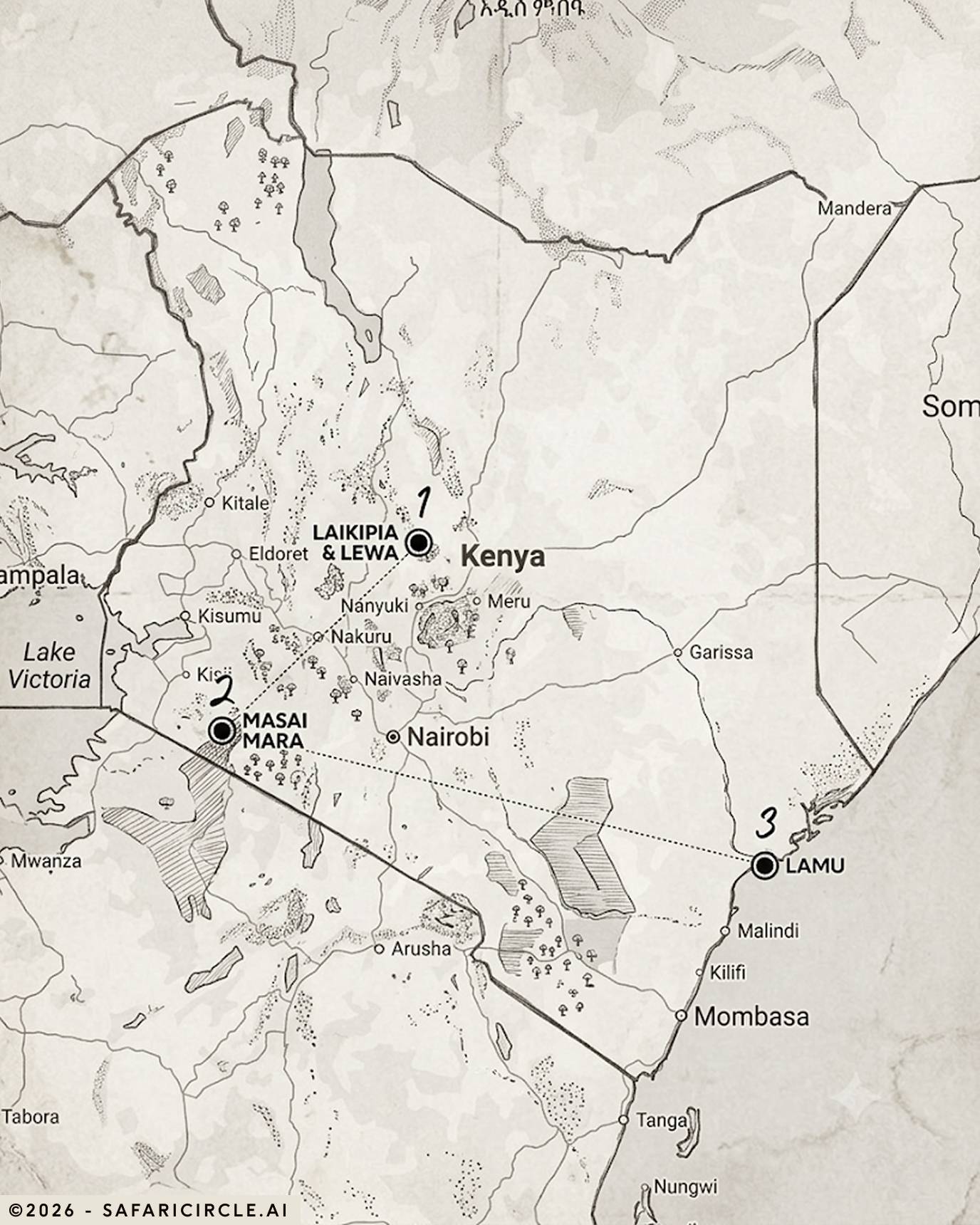
10-night Kenya highlights: Laikipia → Mara → Coast
Lewa Safari Camp, Laikipia — walking safaris, rhino tracking, community visits.
Angama Mara, Masai Mara — big cat game drives, balloon flight, escarpment sundowners.
The Majlis, Lamu — dhow sailing, Swahili culture, Indian Ocean downtime.
Kenya’s safari regions are well-established tourism areas with strong security infrastructure. The Masai Mara, Laikipia, Amboseli, Samburu and Tsavo have operated safely for decades. The UK FCDO advises against travel to some border areas, but these are not safari destinations. Safari Circle monitors FCDO advisories continuously.
Yes. Kenya’s beautiful Indian Ocean coast (Diani Beach, Watamu, Lamu) is a 2-hour flight from the Masai Mara. A typical combination is 5–7 nights on safari followed by 3–5 nights on the coast. Zanzibar in Tanzania is also reachable via Nairobi with an evening connection.
Five nights on safari is a workable minimum. Seven to ten nights lets you cover two or three regions such as Masai Mara plus Laikipia, or Mara plus Amboseli plus the coast. Longer stays bring per-night costs down and avoid the rushed feeling that makes a four-night trip feel superficial. If you just want to dip your toe into safari, we can also recommend some Nairobi based experiences such as the iconic Giraffe Manor and Sheldrick Wildlife Trust combined with 3 nights in one park.
UK travellers flying direct to Kenya do not need a yellow fever certificate. It is required only if arriving from or transiting through a country classified as at risk of yellow fever transmission. This is relevant if your itinerary includes onward travel to Tanzania or Uganda. Malaria prophylaxis is strongly recommended for all safari regions. Consult a travel health clinic at least 6–8 weeks before departure.
UK citizens need a Kenya Electronic Travel Authorisation (eTA). It costs USD $30 (as at May 2026) and is processed online at the official portal (etakenya.go.ke). Apply at least 3 business days before travel. You’ll need a passport valid for at least six months. The eTA replaced the previous visa system in January 2024.

As an independent partner of 360 Private Travel, eligible flight-inclusive holidays booked through us are financially protected by 360 Private Travel Ltd under the UK ATOL scheme, ATOL number 7514. 360 Private Travel Ltd is also IATA accredited under IATA number 91200056.
Qualifying flight-inclusive holidays are financially protected under the UK ATOL scheme, where applicable. You will receive an ATOL Certificate confirming the protection covering your individual booking.



.png)
.jpg)
