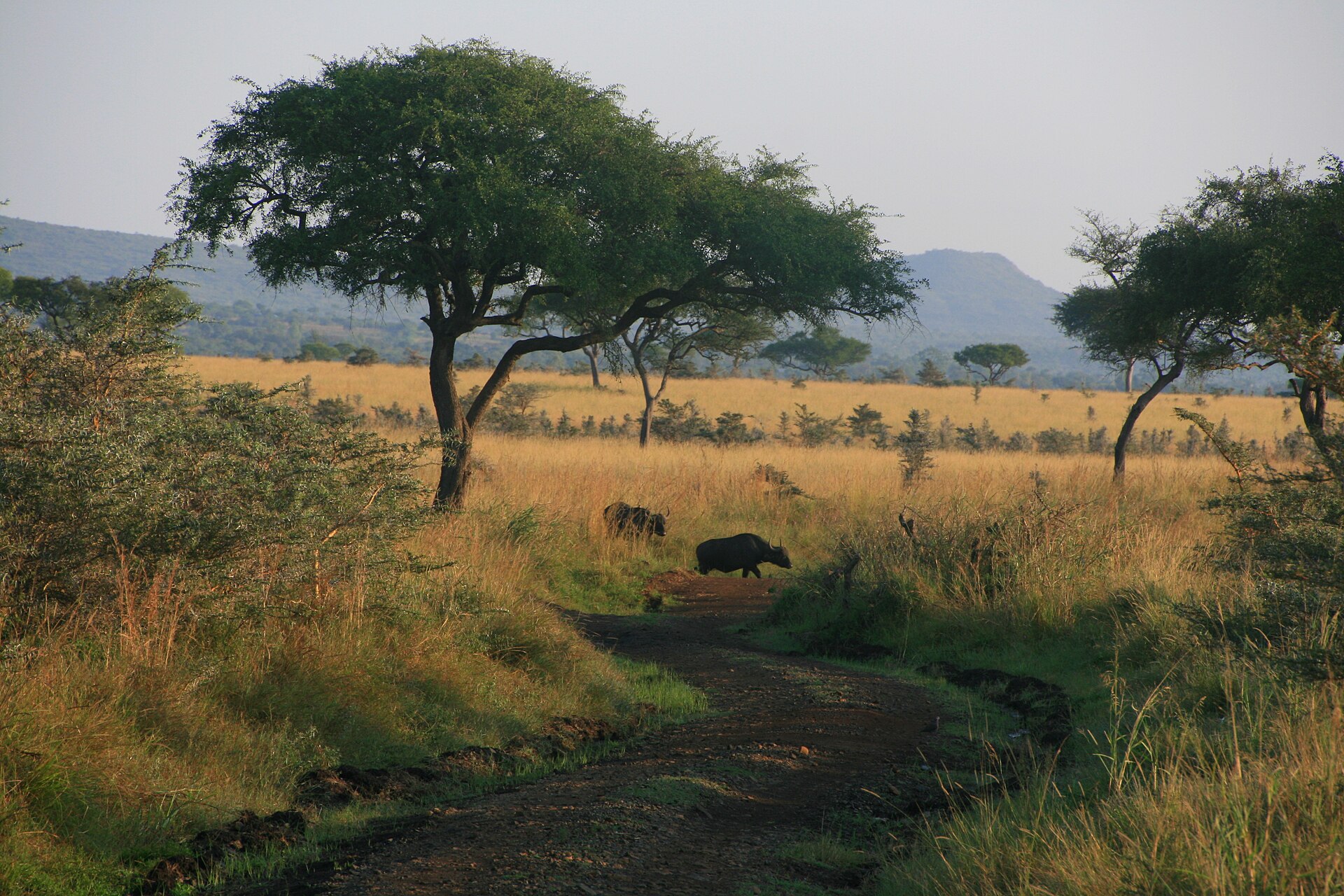
Ruma National Park is one of Kenya’s least-visited safari areas, set in western Kenya near Lake Victoria. It is best known as Kenya’s only protected home of roan antelope, with open grassland, woodland, birdlife and a slow, uncommercial rhythm that appeals to curious repeat travellers.
Lambwe Valley
The Lambwe Valley is the park’s main landscape: open grassland, wooded slopes and a quiet, enclosed feeling far from Kenya’s classic safari routes. It is the best area for general game drives and roan antelope context.
Kanyamwa Escarpment
The escarpment gives Ruma a scenic backdrop and helps frame the park’s sense of seclusion. It is not a high-luxury safari zone, but it gives the landscape shape, views and a distinctive western Kenya identity.
Lake Victoria Extension
Ruma can form part of a western Kenya journey that also touches Lake Victoria, birding areas or cultural routes. That broader context is often more compelling than treating Ruma as a stand-alone safari destination.
Ruma’s signature species is roan antelope, rare in Kenya and central to the park’s appeal. Travellers may also see Rothschild’s giraffe, buffalo, oribi, Jackson’s hartebeest, hyena and rich birdlife, including blue swallows seasonally. Predator density is not the reason to come.
The short answer: Kenya works almost all year-round, but July to October is peak season for a reason. The Great Migration is in the Mara during these months, vegetation is low and animals concentrate around water sources. This is also when prices are highest and conservancy camps book out 6–12 months ahead.
January and February are the most underrated months. The Mara’s resident wildlife is still excellent, the light is extraordinary for photography, and you will typically pay 20–30% less than peak season rates.
Green season (April–May) brings rain, lush landscapes, and newborn animals but some camps close entirely. November and early December offer a sweet spot: short rains, lower prices, and calving season on the Mara’s southern plains. Late December into the first week of January see peak pricing again however.
For families constrained by school holidays, the July–August summer break aligns with peak migration. October half-term catches the tail end. Easter falls in green season — Laikipia and Samburu are better bets than the Mara during this period.

Ruma is not an awards-led lodge destination. Its distinction comes from conservation value, obscurity and the protection of roan antelope in Kenya. For the right traveller, that rarity is more meaningful than mainstream safari recognition.
Ruma suits repeat safari travellers, birders and naturalists who enjoy places that feel overlooked and unpolished.
It can appeal to Pioneer-style travellers interested in rare antelope, quiet parks and the feeling of being away from the standard circuit.
It is not ideal for first-timers, honeymooners seeking polished luxury, or families wanting high-density wildlife and broad lodge choice.
From the UK, travellers usually fly into Nairobi, then connect onward to western Kenya by domestic flight and road, or travel overland as part of a longer itinerary.
Ruma is remote from Kenya’s main safari circuit, so it needs deliberate planning rather than a casual add-on.
It pairs best with Lake Victoria, Kakamega Forest, western Kenya cultural travel or a wider specialist route, not with a short luxury safari.
Ruma is best known as Kenya’s only protected home of roan antelope, making it a specialist destination for naturalists and repeat safari travellers. It also offers birdlife, quiet grassland scenery and a very different rhythm from Kenya’s famous parks.
Usually not. Ruma is interesting, but it does not offer the wildlife density, lodge range or big-cat reliability that most first-time safari travellers expect. It works better as a specialist addition for someone who already knows East Africa.
Roan antelope are the key species. Rothschild’s giraffe, buffalo, oribi, Jackson’s hartebeest, hyena and many birds may also be seen. Predator sightings are possible but should not be treated as a central reason for visiting.
One or two nights is usually sufficient unless you are birding or exploring western Kenya in depth. Ruma is best used as part of a broader regional journey rather than as a stand-alone safari holiday.
Most travellers route through Nairobi and then continue to western Kenya by domestic flight and road, or travel overland as part of a longer itinerary. It is not a quick or seamless add-on to the main safari circuit.
Lodge choice is limited and generally more practical than luxurious. Travellers should come for rarity, quiet and conservation interest rather than expecting the polished camp standards found in the Mara, Laikipia or Samburu.


Some of the flights and flight-inclusive holidays booked with Safari Circle are financially protected by the ATOL scheme. If you don’t receive an ATOL certificate, the booking will not be ATOL protected. In the unlikely event of our insolvency, the Civil Aviation Authority (CAA) would ensure that you’re not stranded abroad. They will also arrange to refund any funds you have already paid us towards your booking. You can verify our ATOL status on the Civil Aviation Authority website. Please note, we operate as independent partners to Major Travel (ATOL 2933)
ABTA act as a trade association (both commercial & regulatory) for travel agents and tour operators in the UK. As independent partners to Major Travel, all of our bookings at Safari Circle that contain hotels, tours or car hire but do not include international flights are protected under Major Travel’s ABTA Bond. In the unlikely event of an unresolved dispute between you as a passenger and us/Major Travel, you can use the ABTA arbitration service as an alternative to legal action. You can verify our ABTA number (Y6455, P7169) on the ABTA website.
.png)

.jpg)