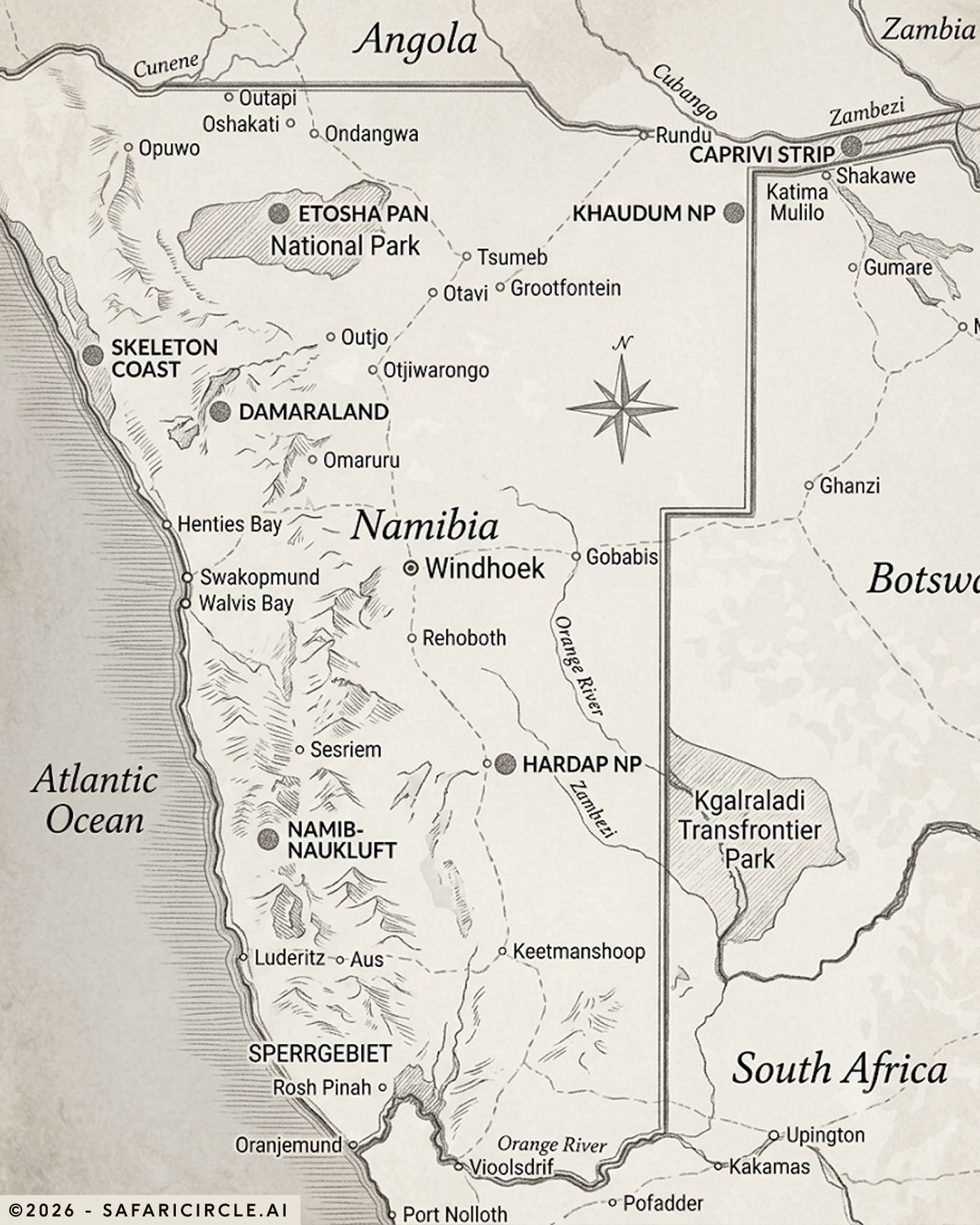
The Zambezi Region, formerly the Caprivi Strip, is Namibia’s lush river corridor, a world away from the country’s deserts and salt pans. Here the safari is shaped by water: elephant movement, wetlands, hippo, crocodile, birdlife and easy links toward Chobe, Victoria Falls and Botswana.
Bwabwata National Park
Bwabwata protects a long riverine and woodland corridor between the Kavango and Kwando systems. It is important for elephant movement and works well for travellers interested in Namibia’s greener, more connected conservation landscapes.
Mudumu and Nkasa Rupara
These wetter eastern parks bring floodplain, reedbed and river habitat into the safari picture. They are excellent for birdlife, elephants, buffalo and a softer water-influenced rhythm than Namibia’s desert regions.
Kavango, Kwando and Zambezi Rivers
The rivers are the region’s defining feature, supporting boat trips, fishing in some areas, hippo, crocodile and prolific birds. They also make the Zambezi Region a natural bridge toward Botswana and Victoria Falls.
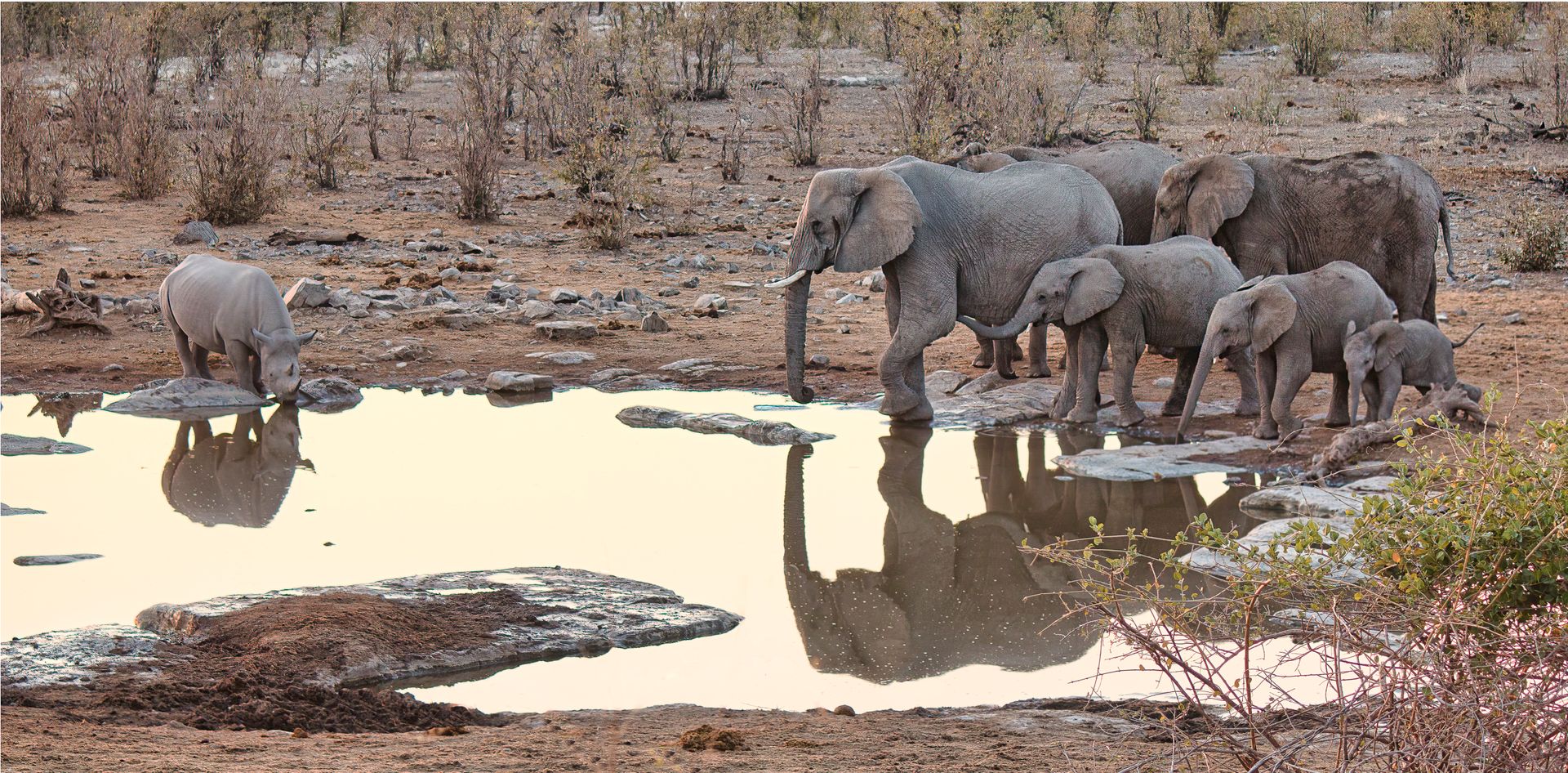
Wildlife in the Zambezi Region is water-led. Elephant, buffalo, hippo, crocodile, sable, roan, antelope and superb birdlife are key highlights, with predators present but less reliable than in Botswana’s premium concessions. The region is especially rewarding for travellers who enjoy river safaris.
May to October is the dry season and the strongest window for Etosha game viewing. Waterholes concentrate wildlife, vegetation is sparse, and temperatures are comfortable during the day but cold on early-morning drives. This is peak season - the top camps book 6–12 months ahead.
April and November are the shoulder months worth knowing about. Etosha’s game viewing is already strong, lodge rates drop, and the light is clean for photography. Sossusvlei and the Skeleton Coast work year-round as the desert doesn’t follow a wet-dry cycle in the same way.
December to March is green season in the north. Etosha’s pan can flood, attracting flamingos. Daytime temperatures exceed 35°C. Some roads become difficult. Rates drop 20–40% at many properties.
For UK families: July–August school holidays align with peak dry season. October half-term catches excellent late-dry conditions. Easter falls in the shoulder–green transition — Sossusvlei and the Skeleton Coast are more reliable than Etosha in April.

Lodges range from relaxed river lodges to simple safari camps and practical touring bases. The style is generally less polished than Namibia’s highest-end desert camps, but the best properties offer strong river access, birding, boating and a very different mood from Etosha or Damaraland.
The Zambezi Region is not primarily an awards-led lodge destination. Its value lies in ecological contrast, river access and route logic, especially for travellers combining Namibia with Chobe, the Okavango Delta or Victoria Falls.
The Zambezi Region suits travellers who want Namibia to feel greener, wetter and more wildlife-rich than the desert route alone.
It is especially good for birders, elephant enthusiasts and travellers planning a Namibia-to-Botswana or Victoria Falls journey.
It is less suited to those who want Namibia’s iconic dunes and desert silence to remain the sole focus.
From the UK, travellers usually fly into Windhoek or connect via regional hubs, then continue by domestic flight or long road routing.
The region is often included in extended Namibia itineraries or cross-border routes linking Botswana, Zambia or Zimbabwe.
Because distances are significant, it works best with enough time to avoid rushing between river parks, border posts and onward safari areas.
The Zambezi Region is known for rivers, wetlands, elephants, hippos, crocodiles and exceptional birdlife. It is Namibia’s greenest safari corridor and feels completely different from the country’s deserts, dunes and salt pans.
Yes, especially for river-based wildlife, birding and elephant movement. It is not as polished or predator-rich as Botswana’s top private concessions, but it adds real ecological contrast to a Namibia itinerary.
Two to four nights can work, depending on whether it is a route stop or a core river-safari section. Longer stays make more sense when combining several parks or continuing toward Chobe and Victoria Falls.
Travellers usually arrive by long road transfer, domestic flight routing or as part of a cross-border circuit. Distances from Windhoek are considerable, so the region needs proper itinerary space rather than a rushed add-on.
Yes. The river systems, wetlands and floodplains support excellent birdlife, including many species not typical of Namibia’s drier regions. Birders often find the Zambezi Region one of the most rewarding parts of the country.
Yes. Its position makes it a natural link toward Chobe, the Okavango Delta and Victoria Falls, though border logistics and transfer timing should be planned carefully to preserve safari time.

As an independent partner of 360 Private Travel, eligible flight-inclusive holidays booked through us are financially protected by 360 Private Travel Ltd under the UK ATOL scheme, ATOL number 7514. 360 Private Travel Ltd is also IATA accredited under IATA number 91200056.
Qualifying flight-inclusive holidays are financially protected under the UK ATOL scheme, where applicable. You will receive an ATOL Certificate confirming the protection covering your individual booking.



.png)