.jpg)
The Masai Mara and its surrounding conservancies are Kenya’s highest-density big cat territory - lion, leopard and cheetah sightings are routine rather than exceptional here. Between July and October, the Great Migration brings 1.5 million wildebeest through the reserve. Whilst the national reserve can feel busy at peak season, the private conservancies cap vehicle numbers and permit night drives. Lodges like Angama Mara, Mara Plains Camp, and Governors' Camp set the standard for East African luxury.
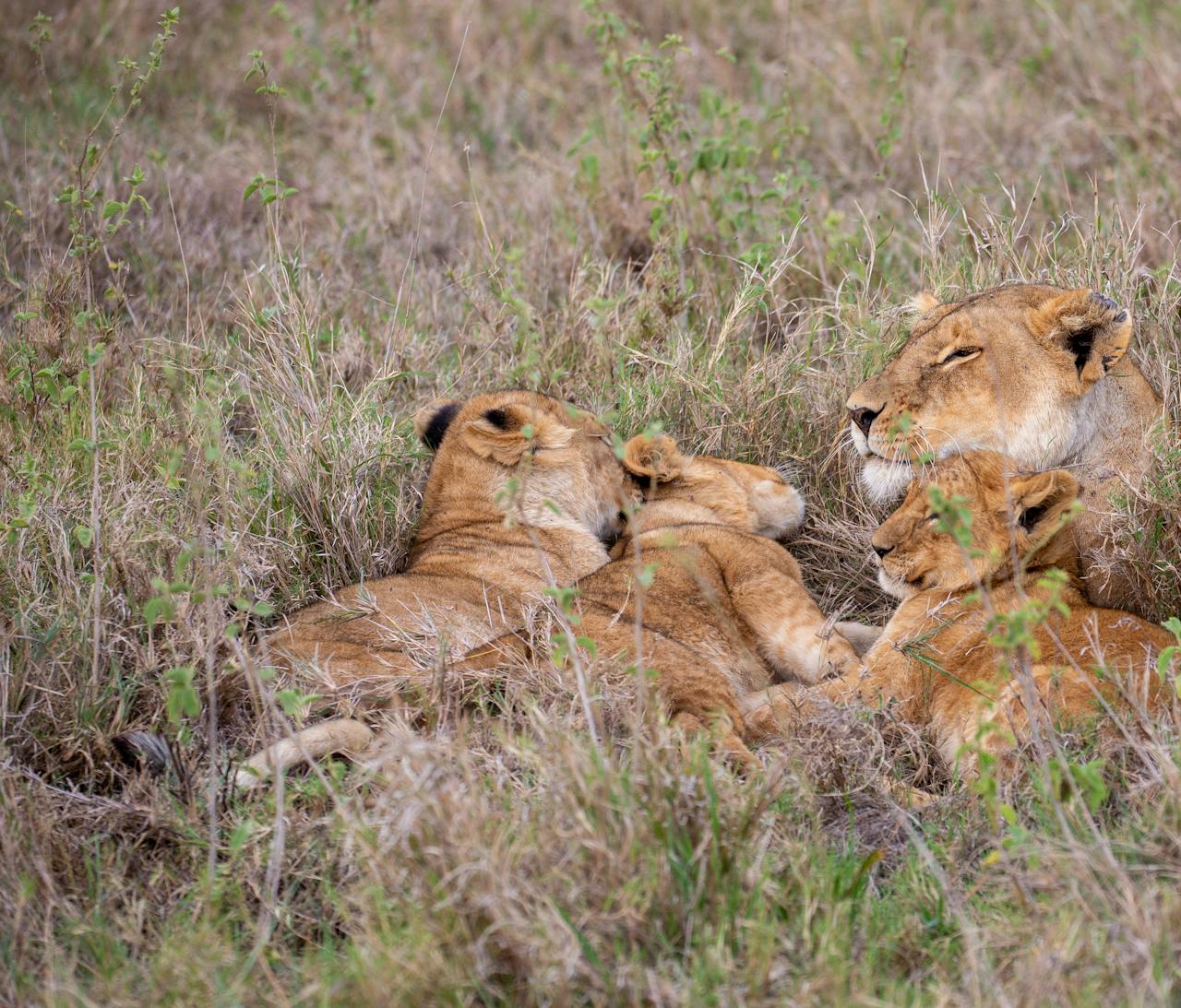


Masai Mara National Reserve
The Masai Mara National Reserve is the classic heart of the Mara: wide golden plains, abundant predators, and front-row access to one of Africa’s most iconic safari landscapes. This is where the drama feels immediate, from big cat sightings to seasonal river crossings during the Great Migration.
Masai North Conservancy
Mara North offers a quieter, more exclusive expression of the Mara, with sweeping savannahs, strong wildlife densities, and a lighter vehicle presence than the main reserve. It is particularly well suited to travellers looking for intimacy, space, and a deeper sense of wilderness.
Masai Triangle
The Mara Triangle is one of the most scenic corners of the ecosystem, framed by the Oloololo Escarpment and cut through by the Mara River. Its open plains, riverine forests, and excellent game viewing make it a beautifully balanced choice for both migration season and year-round safari.
Olare Orok Conservancy
Olare Orok is renowned for exceptional big cat viewing, elegant camps, and the sense of having the Mara almost to yourself. With limited visitor numbers and superb guiding, it delivers a polished, private safari experience without losing the rawness of the wild.
Ol Kinyei Conservancy
Ol Kinyei is one of the Mara’s more understated gems, known for its rolling grasslands, resident wildlife, and strong community conservation story. It feels peaceful and personal, ideal for travellers drawn to low-impact safari and a slower, more connected pace.
Naboisho Conservancy
Naboisho combines rich wildlife, excellent predator sightings, and a wonderfully open, uncrowded feel. It is a standout choice for those who want the freedom of a private conservancy, with night drives, walking safaris, and a strong emphasis on conservation-led travel.
In the Masai Mara, wildlife is not just seen but heard: lions calling across the plains before dawn, hyenas whooping in the dark, and the constant chorus of birds rising with the light. Days can bring elephants moving through the grass, giraffes browsing acacia trees, cheetahs scanning from termite mounds, leopards slipping through riverine forest, and vast herds of zebra, wildebeest, buffalo, gazelle and topi spread across the savannah.
The short answer: Kenya works almost all year-round, but July to October is peak season for a reason. The Great Migration is in the Mara during these months, vegetation is low and animals concentrate around water sources. This is also when prices are highest and conservancy camps book out 6–12 months ahead.
January and February are the most underrated months. The Mara’s resident wildlife is still excellent, the light is extraordinary for photography, and you will typically pay 20–30% less than peak season rates.
Green season (April–May) brings rain, lush landscapes, and newborn animals but some camps close entirely. November and early December offer a sweet spot: short rains, lower prices, and calving season on the Mara’s southern plains. Late December into the first week of January see peak pricing again however.
For families constrained by school holidays, the July–August summer break aligns with peak migration. October half-term catches the tail end. Easter falls in green season — Laikipia and Samburu are better bets than the Mara during this period.

Masai Mara safari lodges range from classic tented camps that place you close to the sounds and rhythms of the bush, to refined luxury lodges with sweeping views, private decks, pools, spas, and highly personalised guiding. In the main reserve, camps tend to offer easy access to big game and migration routes, while the private conservancies are known for smaller, more exclusive lodges with a quieter atmosphere, flexible safari activities, and a strong sense of connection to the surrounding landscape and local communities.
The Masai Mara has always drawn attention for the drama of its plains, but increasingly its lodges are drawing attention in their own right. Awards from the likes of Travel + Leisure, Condé Nast Traveler and the World Travel Awards tend to gather around the Mara because the best properties here do more than place you near the wildlife. They understand how to hold the experience around it: the guiding, the service, the design, the sense of arrival, the feeling that the landscape has not been used as a backdrop but allowed to lead.
What those accolades really tell a traveller is not that there is one “best” lodge, but that the Mara now holds several different versions of excellence. There is intimate tented luxury for those who want the bush to feel close and personal. There is polished, full-service comfort for travellers who want reassurance and ease. There are long-established lodges with sweeping views and deep familiarity with the ecosystem, and newer camps bringing a more contemporary, boutique sensibility to safari.
The Masai Mara suits travellers who want a high-impact safari with exceptional wildlife and a relatively seamless journey from the UK
The Mara is one of the most reliable safari destinations in Africa, with strong year-round game viewing, excellent guiding, and a wide choice of camps and lodges. For travellers who want their first safari to deliver big cats, open plains and classic East African scenery, it is a very low-risk choice.
The private conservancies are particularly well suited to older children and teens, with a more flexible safari rhythm than the main reserve. Depending on the camp, this can include walking safaris, night drives, bush skills, conservation experiences and time with Maasai guides, giving teenagers a more active and varied experience than game drives alone.
The Mara works beautifully for couples who want cinematic wildlife, intimate camps and a sense of occasion without overcomplicating the journey. It also pairs easily with the Kenyan coast, whether that means barefoot downtime on Diani Beach or a more characterful stay in Lamu.
For families or groups celebrating a significant birthday, anniversary or reunion, the Mara’s private conservancies offer some excellent exclusive-use houses, small camps and villa-style safari options. These give groups privacy, flexibility and superb wildlife access, though the best properties book far in advance, especially during migration season.
From the UK, the easiest route to the Masai Mara is to fly into Nairobi’s Jomo Kenyatta International Airport, usually with either a direct flight from London or a one-stop connection via Europe or the Middle East.
Most travellers then overnight in Nairobi before transferring across to Wilson Airport, the city’s smaller domestic airport, for a light aircraft flight into the Mara, landing at the airstrip closest to their lodge or conservancy; these safari flights typically take around 45–60 minutes.
For a slower, more adventurous arrival, it is also possible to travel by road from Nairobi, though the journey is considerably longer and can be bumpy in places, so flying is usually the most seamless option for a luxury safari.
Most travellers should allow at least three nights if Masai Mara is the main safari focus. Two nights can work as part of a wider route, but three gives enough time for different light, weather and wildlife patterns to emerge.
The best timing depends on the main reason for going. Dry months usually improve wildlife visibility in many safari areas, while green season can bring softer light, fewer visitors, birdlife and a more atmospheric landscape.
Masai Mara can work for a first safari if its strengths match the traveller. It is important to choose it for the right reasons, rather than expecting every destination to deliver the same kind of wildlife density or lodge style.
The best lodge is usually the one with the strongest location, guiding and rhythm for the experience you want. Price and polish matter, but they should not outrank access, seasonality and how the lodge uses its surrounding landscape.
Yes, but the combination needs to preserve safari time rather than simply look interesting on a map. The best pairings are those with practical transfers and a clear contrast in wildlife, landscape or activity style.
The main trade-off is expectation management. Masai Mara has a clear role, but it may not deliver every safari priority at once. A good itinerary leans into what the area does best instead of forcing it to behave like somewhere else.

As an independent partner of 360 Private Travel, eligible flight-inclusive holidays booked through us are financially protected by 360 Private Travel Ltd under the UK ATOL scheme, ATOL number 7514. 360 Private Travel Ltd is also IATA accredited under IATA number 91200056.
Qualifying flight-inclusive holidays are financially protected under the UK ATOL scheme, where applicable. You will receive an ATOL Certificate confirming the protection covering your individual booking.



.png)

.jpg)