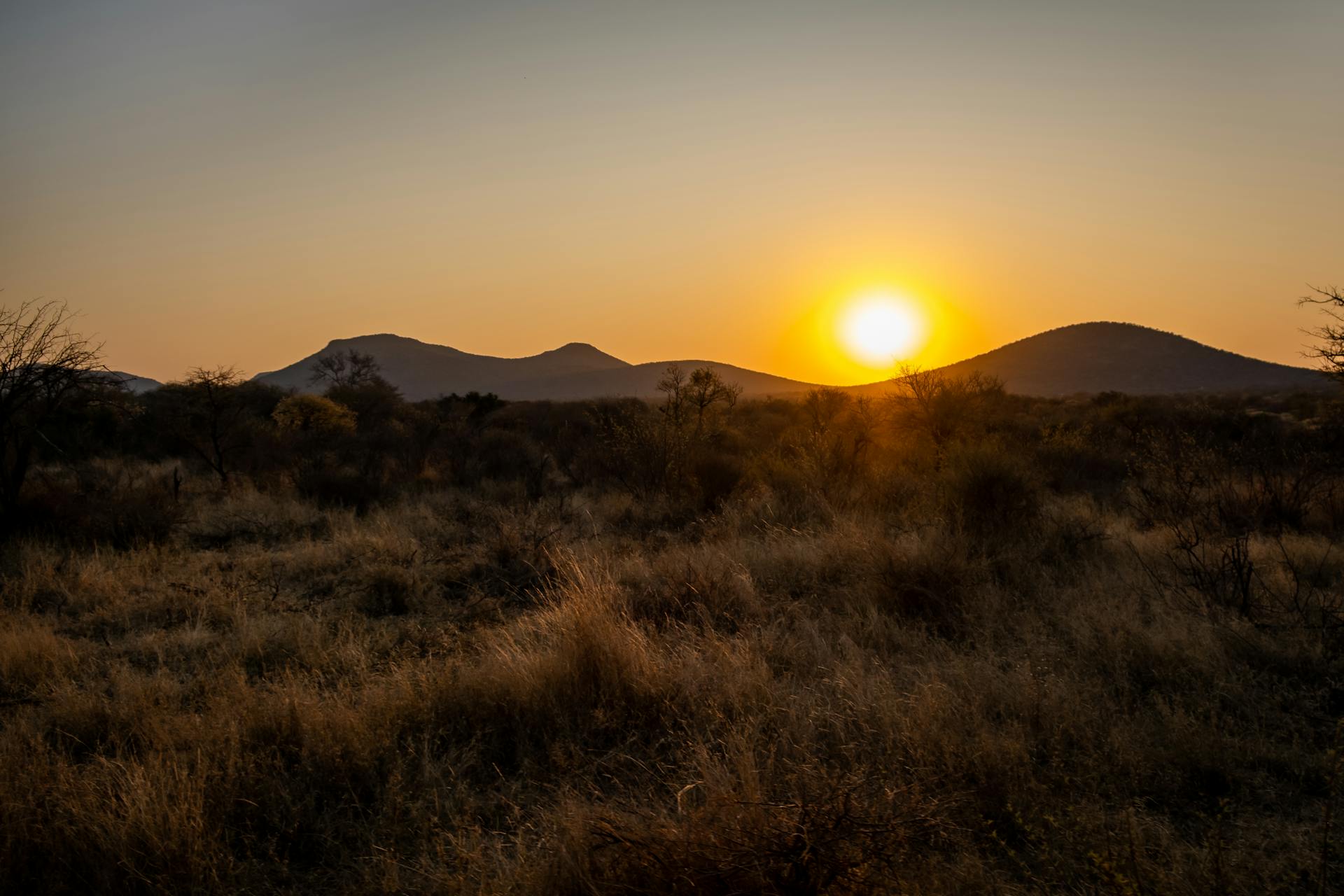

Location and concession model. A lodge inside a national park shares that park with every other visitor. A lodge on a private conservancy pays for exclusive access to the land- this means fewer vehicles, off-road driving, walking safaris, night drives which are not possible in national parks. That access has a cost and it is the single biggest factor in what you pay per night. Lewa Conservancy in Kenya or the Sabi Sand in South Africa are private concessions where your vehicle might be one of three on a sighting, rather than one of twenty.
Season. Most safari regions have three pricing bands: peak (dry season, best game viewing, highest demand), shoulder (edges of the dry season with strong wildlife, fewer visitors), and green (wet season, lowest rates, lush landscapes). The difference between peak and green can be 50–90% at the same property.
Group size and configuration. Safari rates are quoted per person per night sharing - meaning two adults sharing a room. A single traveller pays a supplement, typically 30–50% above the sharing rate. A family of four in two rooms pays differently from a couple. Who gets counted as a child varies by property. The maths shifts significantly depending on how many people share vehicles and guides.
What is included in the rate. The phrase “all-inclusive” means very different things at different properties. At the higher end of the luxury tier, your nightly rate may cover a private vehicle and guide dedicated to your party, all meals and house drinks including good wines, daily laundry, conservancy fees, walking safaris and even Swarovski binoculars in your vehicle. At a lower-priced luxury property, the same “all-inclusive” label might exclude drinks beyond water and soft drinks, charge a supplement for a private vehicle instead of a shared one, bill laundry separately and list walking safaris or night drives as paid extras. Always ask what is in and what is out before comparing headline rates.
A safari can look expensive next to a luxury beach holiday. But the headline number includes far more than most people realise. Let us say a couple has a budget of $10,000–$12,000 each (roughly £7,800–£9,400) for an eight-night holiday excluding international flights. The typical safari itinerary would include three locations across Kenya. To compare fairly, the Maldives trip splits between two resorts in different atolls - because variety is part of what makes both holidays experiential.
Both itineraries use properties in a comparable luxury range. The Kenya safari stays at starts with a city stay at House of Waine in Nairobi’s Karen neighbourhood, Sirikoi Lodge in Lewa Conservancy, and Rekero Camp on the Masai Mara’s Talek River. The Maldives trip splits between Constance Moofushi in South Ari Atoll and Anantara Kihavah in Baa Atoll.
Kenya safari: Nairobi (2 nights) → Lewa Conservancy (3 nights) → Masai Mara (3 nights), August
Maldives beach: Constance Moofushi, South Ari Atoll (4 nights) → Anantara Kihavah, Baa Atoll (4 nights), February

¹ Kenya safari lodge rates at this tier bundle accommodation, all meals and house drinks, two guided game drives per day with a private vehicle and tracker, walking safaris, bush breakfasts, laundry and airstrip transfers into a single nightly rate. There is no bill at checkout. Conservancy fees have been separated out to show what goes directly to conservation (see note 3). On the Maldives side, Constance Moofushi is fully all-inclusive (all meals and premium drinks, taxes included in the rate). Anantara Kihavah is breakfast and dinner only — lunch and premium drinks are charged separately. The Maldives accommodation figure includes an estimated $500 per person for four days of lunch and drinks at Anantara Kihavah, to bring it closer to a like-for-like comparison.
² Kenya: Sheldrick Wildlife Trust elephant orphanage visit ($25 pp). All other activities are included in the lodge rate — twelve game drives across six days, plus walking safaris, sundowners and bush meals. Maldives: four scuba dives at approximately $175 per dive including equipment hire. Snorkelling and non-motorised water sports are included in the room rate.
³ Kenya park and conservancy fees: Lewa Conservancy $126 per person per night (× 3 nights = $378) and Masai Mara $200 per person per night (× 3 nights = $600). These fees fund anti-poaching patrols, community land leases, habitat management, and ranger salaries. They are typically included in your lodge rate — most travellers never realise how much of what they pay goes directly to conservation.
⁴ Constance Moofushi taxes are included in the room rate. Anantara Kihavah taxes (12% GST and 10% service charge) are charged separately.
⁵ Kenya: three internal flight sectors (Nairobi–Lewa, Lewa–Mara, Mara–Nairobi) plus ground transfers. Maldives: two separate return seaplane transfers — Constance Moofushi ($600 pp) and Anantara Kihavah (~$860 pp). Direct transfers between resorts in different atolls are not available; you fly back to Malé between each.
Both trips land within a $10,000–$12,000 per person budget — but the safari comes in lower and arguably delivers more for the money. The accommodation lines are almost identical, but the safari rate bundles in twelve guided game drives, walking safaris, all drinks, and daily laundry. One of the two Maldives resorts does not include lunch in the rate. Nearly $1,000 per person of the safari cost goes directly to conservation funding the rangers, the land leases and the habitat that makes the experience possible. And the biggest hidden cost in the Maldives is the inter-resort seaplane: visiting two resorts means two return seaplane fares, adding $1,460 per person. On safari, your internal flights carry you between three completely different landscapes for $1,000.
These are illustrative ranges for a seven-night safari per person, including accommodation, meals, game activities and internal transfers — but not international flights, insurance, or visas.
£3,000–£4,500 per person. Classic tented safari camps that offer great value. At properties like Basecamp Wilderness in Kenya’s Naboisho Conservancy, eco credentials and guiding quality are strong and the benefits of a private conservancy (walking safaris, night drives, low vehicle density) are at an accessible price point. Most properties at this price point are inside National Parks where you’d experience shared game drive vehicles, experienced guides and comfortable tented rooms. You will see the same animals but you may share the sighting with other vehicles.
£5,000–£8,000 per person. The sweet spot for considered buyers. This is where comfort and luxury step up meaningfully — private vehicles, stronger guiding ratios, conservancy access that unlocks walking safaris and night drives. andBeyond Kichwa Tembo in the Masai Mara (from around $1,265 per person per night at peak) or andBeyond Ngala Tented Camp in South Africa’s Greater Kruger (from around $1,600) deliver an experience that feels personal and unhurried. This is where most Safari Circle itineraries land.
£8,000–£15,000 per person. Singular properties where staff-to-guest ratios reach six to one, where your guide has twenty years in the same concession and where the land itself is part of the story. Londolozi Granite Suites in South Africa’s Sabi Sand or Selinda Camp in Botswana’s Selinda Reserve, both Relais & Châteaux recognised, represent this tier. You are not paying for thread count. You are paying for what surrounds you and who is showing it to you.
A safari specialist whose sole focus is this kind of travel builds deep relationships with lodges and operators over years. That means access to negotiated rates that are not published on any website and the ability to identify savings you would not know to look for: circuit discounts, long stay discounts, active promotions during your specific travel window and birthday or honeymoon credits that are not always visible on public rate cards. A general travel agent can absolutely arrange a safari, but they often work with a safari specialist behind the scenes anyway. Going direct to the specialist removes a layer without adding cost.
We have heard stories of travellers who research on ChatGPT, Google, or travel blogs and book lodges directly to try and save on budget. Then they realise (often too late) they have not factored in the logistics of getting from one property to another. Bush airstrips, charter flight schedules, road transfer times — these are invisible until you are on the ground. A specialist builds the logistics into the itinerary from day one with a partner on the ground coordinating your transfers and pickups between properties. Getting this wrong means wasting precious safari days on last-minute solutions. And even worse, in the event something goes wrong a self booked itinerary puts the onus on you to sort out any issues without the local know now.
The pattern across regions is consistent: peak season (July–October in most destinations, plus the last two weeks of December and first ten days of January in East Africa, coinciding with school holidays) commands the highest rates. Shoulder season (June and November in East Africa, April–June and November in Southern Africa) typically offers 15–25% lower pricing with strong wildlife viewing and fewer vehicles. Green season can drop rates 50–90% below peak.

Most safari accommodation is priced in US dollars (South Africa also quotes in South African Rand), so the final cost in other currencies will fluctuate with exchange rates.
Rwanda and Namibia follow different seasonal patterns from the main safari regions. Rwanda’s pricing is driven primarily by gorilla trekking permit costs rather than traditional seasonal demand. Namibia’s vast geography means self-drive, fly-in, and guided expedition itineraries each follow distinct pricing logic with less pronounced seasonal swings.
Shoulder season is where we see the strongest value for most Safari Circle travellers.
Different travellers value different parts of what drives the price. If your Safari DNA profile leans towards The Curator, someone who prioritises guiding quality and depth of knowledge, the difference between a good guide and a great one matters more than the thread count. If you are a Pioneer, you are paying for remoteness and exclusivity that only a private concession delivers. Understanding what you value most shapes which price tier delivers the best experience for you, not simply the highest one.
How much does a luxury safari cost per person? A seven-night safari at the luxury tier typically costs £5,000–£8,000 per person, including accommodation, meals, game activities, and internal transfers. Exclusive-tier properties and peak-season travel can push this to £8,000–£15,000 per person. International flights, insurance and visas are additional.
Is it cheaper to book a safari directly or through a specialist? The price is typically the same. Safari lodges set their rates and specialists earn commission from the lodge, not from you. A specialist may access negotiated rates, circuit discounts, and seasonal promotions that reduce the overall cost below what you would find booking each property individually.
What does “all-inclusive” mean at a safari lodge? It varies significantly. At higher-end properties, all-inclusive covers accommodation, all meals, premium drinks, a private vehicle and guide, conservancy fees, laundry and specialist equipment. At other properties with the same label, drinks, private vehicles, laundry and activities like walking safaris may be charged separately. Always confirm the full inclusion list before comparing rates.
When is the cheapest time to go on safari? Green season (roughly November–March in Southern Africa, March–May in East Africa) offers the lowest rates - typically 50–90% below peak. Shoulder season or “secret season” (the edges of the dry season) offers a better balance of value and wildlife viewing for most travellers. Some lodges close entirely during the heaviest rains, so your safari specialist can help identify which properties are open and offering the strongest value during your travel window.
Do safari lodges charge extra for single travellers? Yes. Rates are quoted per person sharing, meaning two adults in one room. A single traveller occupying a room alone pays a single supplement, which varies by property but is typically 30–50% above the per-person sharing rate. Some lodges waive the single supplement during green season.
Are safari prices negotiable? Lodges rarely negotiate on published rack rates directly with individual guests. However, a specialist with established relationships may be able to advise on special offers or discounts mentioned earlier.
What you pay for a safari matters less than whether you are paying for the right things. The difference between a good trip and an extraordinary one is not always price, it is fit. Understanding what you value most is where every Safari Circle itinerary starts.

As an independent partner of 360 Private Travel, eligible flight-inclusive holidays booked through us are financially protected by 360 Private Travel Ltd under the UK ATOL scheme, ATOL number 7514. 360 Private Travel Ltd is also IATA accredited under IATA number 91200056.
Qualifying flight-inclusive holidays are financially protected under the UK ATOL scheme, where applicable. You will receive an ATOL Certificate confirming the protection covering your individual booking.



.png)