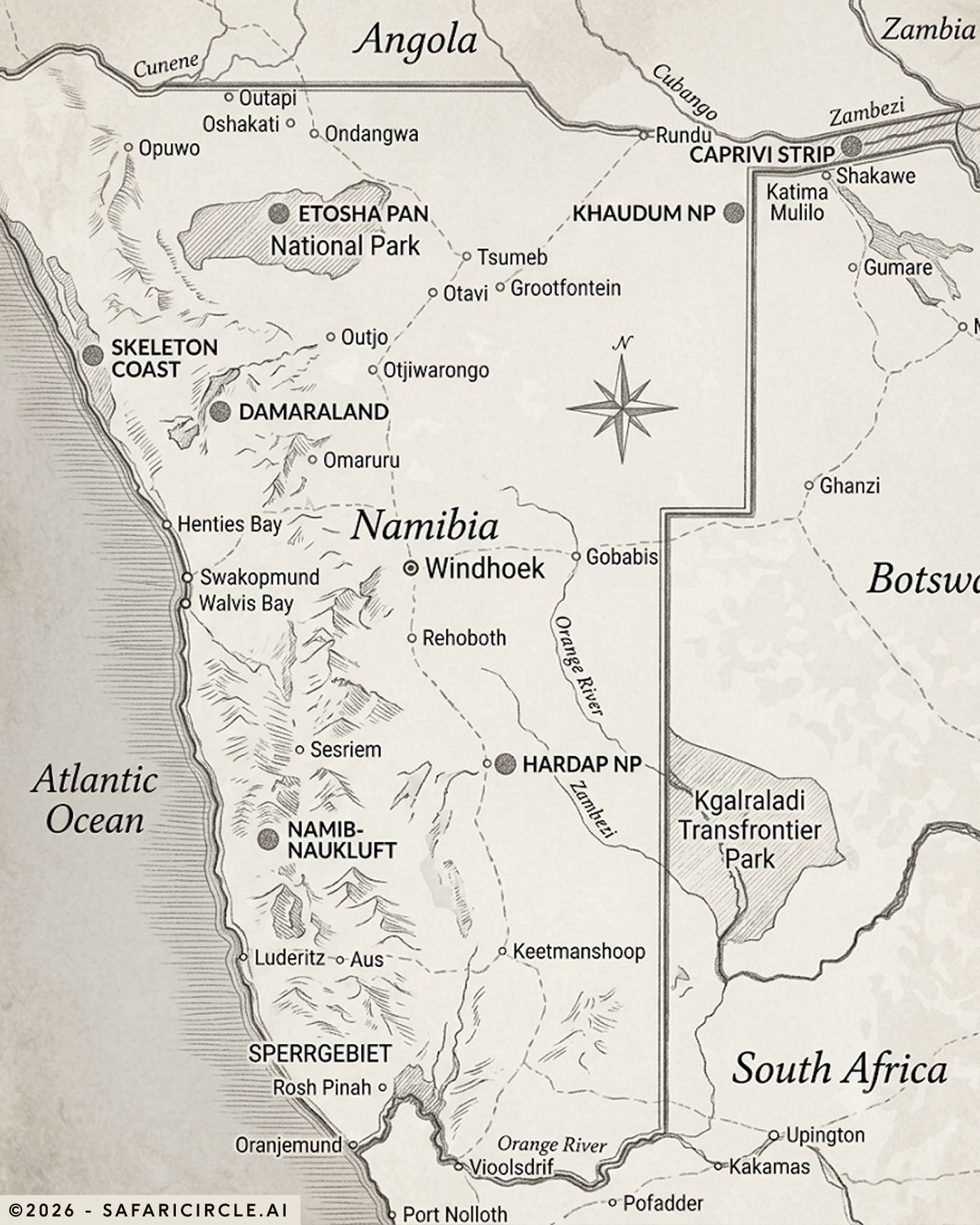
Waterberg Plateau is a dramatic sandstone tableland in northern Namibia, known for scenery, conservation history and a gentler safari rhythm than Etosha. It is often used as a short, atmospheric stop between Windhoek and the north, with walking trails, views and wildlife around the plateau margins.
Waterberg Plateau Park
The plateau itself rises abruptly from the surrounding plains, creating one of Namibia’s most recognisable landforms. The experience is scenic and outdoorsy, with trails, viewpoints and wildlife linked to conservation rather than constant game-drive drama.
Plateau Escarpment
The escarpment zone gives the region its visual impact. It is best for sunsets, walking and the feeling of a natural break in the journey between central Namibia and Etosha or the Zambezi route.
Private Farms and Conservancy Areas
The wider Waterberg area includes private farms and conservation land where game drives, rhino tracking or softer wildlife experiences may be offered depending on the lodge. These areas add flexibility beyond the national park itself.
Waterberg wildlife can include giraffe, eland, sable, roan, white rhino and a range of plains game, though sightings vary by exact area and access. Birdlife is strong, and the plateau’s conservation role gives the wildlife story more depth than a simple game-viewing stop.
May to October is the dry season and the strongest window for Etosha game viewing. Waterholes concentrate wildlife, vegetation is sparse, and temperatures are comfortable during the day but cold on early-morning drives. This is peak season — the top camps book 6–12 months ahead.
April and November are the shoulder months worth knowing about. Etosha’s game viewing is already strong, lodge rates drop, and the light is clean for photography. Sossusvlei and the Skeleton Coast work year-round — the desert doesn’t follow a wet-dry cycle in the same way.
December to March is green season in the north. Etosha’s pan can flood, attracting flamingos. Daytime temperatures exceed 35°C. Some roads become difficult. Rates drop 20–40% at many properties.
For UK families: July–August school holidays align with peak dry season. October half-term catches excellent late-dry conditions. Easter falls in the shoulder–green transition — Sossusvlei and the Skeleton Coast are more reliable than Etosha in April.

Waterberg is better known for conservation history and scenery than headline lodge awards. Its strongest recognition comes from its role in protecting rare species and offering travellers a distinctive plateau landscape within a broader Namibia route.
Waterberg suits travellers who want scenery, walking and a gentle introduction to Namibia’s wildlife landscapes.
It can work well for families and self-drive travellers because the area is accessible and less intense than remote desert regions.
It is not the best choice for travellers seeking predator action, very high-end camps or a stand-alone safari centrepiece.
From the UK, travellers usually fly into Windhoek, then continue by road with a private guide or self-drive routing.
Waterberg is often used between Windhoek and Etosha, or as part of a central-northern Namibia circuit.
Transfers are more straightforward than Namibia’s far north-west, making it a useful first or final stop on a longer safari route.
Yes, especially as part of a broader Namibia route. Waterberg offers dramatic scenery, walking, birdlife and conservation interest, but it is best understood as a complementary stop rather than Namibia’s main safari destination.
Depending on the exact area and activity, travellers may see giraffe, eland, sable, roan, white rhino and other plains game. Birding is also strong. Wildlife viewing is usually gentler and less predictable than in Etosha.
One or two nights is usually enough. A short stay gives time for viewpoints, walks and a gentle wildlife activity before continuing to Etosha, Damaraland or another part of Namibia.
Most travellers reach Waterberg by road from Windhoek, usually with a private guide or self-drive vehicle. It is one of Namibia’s more accessible wilderness stops and fits naturally into a northbound itinerary.
Yes, Waterberg can work well for families because it offers scenery, trails and a softer safari pace. The right lodge is important, especially if you want child-friendly activities and realistic expectations around wildlife sightings.
Waterberg can be visited year-round, though dry-season months usually make wildlife viewing and road travel easier. Summer can be greener and attractive for birding, but it may also be hotter and more variable.



Some of the flights and flight-inclusive holidays booked with Safari Circle are financially protected by the ATOL scheme. If you don’t receive an ATOL certificate, the booking will not be ATOL protected. In the unlikely event of our insolvency, the Civil Aviation Authority (CAA) would ensure that you’re not stranded abroad. They will also arrange to refund any funds you have already paid us towards your booking. You can verify our ATOL status on the Civil Aviation Authority website. Please note, we operate as independent partners to Major Travel (ATOL 2933)
ABTA act as a trade association (both commercial & regulatory) for travel agents and tour operators in the UK. As independent partners to Major Travel, all of our bookings at Safari Circle that contain hotels, tours or car hire but do not include international flights are protected under Major Travel’s ABTA Bond. In the unlikely event of an unresolved dispute between you as a passenger and us/Major Travel, you can use the ABTA arbitration service as an alternative to legal action. You can verify our ABTA number (Y6455, P7169) on the ABTA website.
.png)