.jpg)
The Rwenzori Mountains are a high-altitude world of glaciers, bogs, giant lobelias and cloud forest on Uganda’s western border. This is not a game-drive safari, but a mountain wilderness for trekkers, naturalists and travellers who want Uganda beyond gorillas and savannah wildlife.
Rwenzori Mountains National Park
The national park protects the main trekking routes, montane forest and high alpine zones. It is one of Africa’s most unusual landscapes, with a mood closer to expedition mountain travel than lodge-based safari.
Lower Forest Slopes
The lower slopes hold birds, monkeys, chameleons, waterfalls and dense vegetation. They are useful for shorter walks and travellers who want a taste of the Rwenzoris without committing to a demanding summit route.
High Moorland and Peaks
The upper routes lead into bog, heath, giant groundsels, lobelias and glacial peaks. Conditions are wet, physical and highly specialist, rewarding experienced hikers with one of Africa’s most surreal mountain environments.
Wildlife in the Rwenzoris is subtle and forest-led: birds, chameleons, monkeys, small mammals and unusual plants are more important than large safari species. The real spectacle is botanical and geological, with high-altitude vegetation, mist, waterfalls and mountain weather shaping the experience.
Uganda sits on the equator and is a year-round destination. Gorilla permits are available every day. Two dry seasons shape the calendar.
June to September is the primary dry season and the best window for gorilla trekking — trails are less muddy, the forest floor is firmer, and trekking times tend to be shorter. This is also peak season for Murchison Falls and Queen Elizabeth.
December to February is the secondary dry season. Gorilla trekking is excellent, and savannah game viewing is strong. February is the most underrated month — fewer visitors than July–August, good conditions across all parks, and gorilla permits are easier to secure.
March to May brings the heaviest rain. Some roads become difficult, and gorilla treks are harder. But green-season rates drop, birding is at its peak (Uganda has over 1,000 bird species), and the landscape is lush.
For UK families: July–August school holidays align with the primary dry season. October half-term falls in a shoulder period — conditions are variable but permits are more available. Easter sits in the wet season and is less reliable.

The Rwenzoris are recognised more by climbers, botanists and specialist operators than by luxury lodge awards. Their importance lies in rare Afro-alpine ecology, UNESCO-level natural value and the challenge of reaching landscapes few safari travellers ever see.
The Rwenzori Mountains suit active travellers, serious hikers, naturalists and repeat Africa travellers seeking a completely different kind of wilderness.
They can work beautifully with Uganda primate safaris, especially for those who want forest, altitude and walking to shape the trip.
They are not suitable for travellers expecting easy luxury, predictable wildlife viewing or low-effort safari days.
From the UK, travellers usually fly into Entebbe International Airport, then continue by domestic flight or road toward western Uganda.
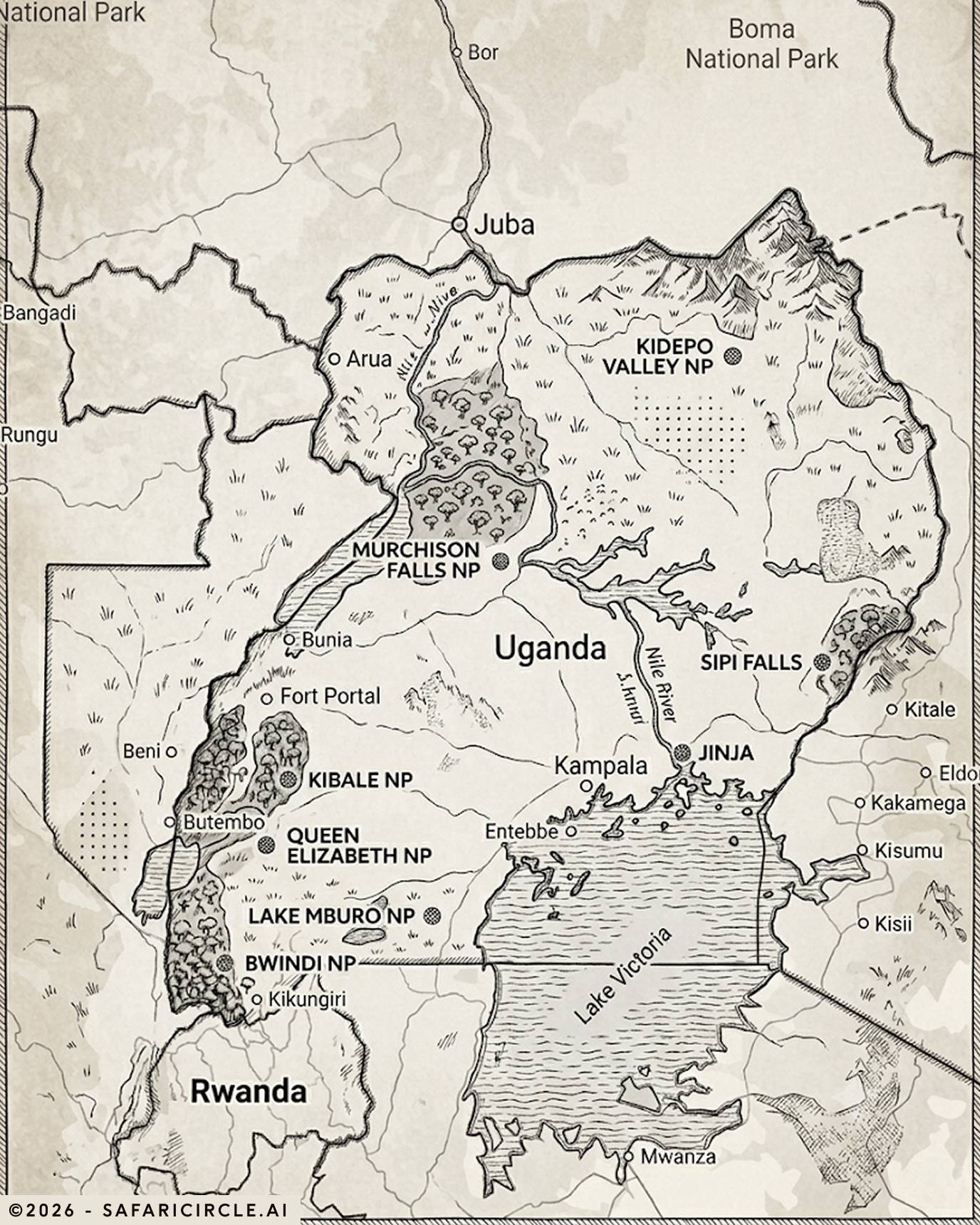
The Rwenzoris are often combined with Kibale, Queen Elizabeth, Bwindi or Semuliki, depending on whether the trip is trekking-led or safari-led.
Road transfers in western Uganda can be long, so the mountains need proper itinerary space rather than a rushed detour.
Not in the classic game-drive sense. The Rwenzoris are a trekking and mountain-wilderness destination, best for hikers, naturalists and travellers who want Uganda’s forests, peaks and unusual Afro-alpine ecology.
Multi-day Rwenzori treks can be physically demanding, wet and muddy, with altitude adding difficulty on higher routes. Shorter foothill walks are easier, but serious trekking requires good preparation, guides and appropriate equipment.
A short foothill stay can take one or two nights, while serious treks require several days to more than a week. The right length depends entirely on whether you want a taste of the landscape or a full mountain expedition.
Most travellers fly into Entebbe, then continue by road or domestic flight routing toward western Uganda. The mountains are often combined with Kibale, Queen Elizabeth or Bwindi, but transfer times need careful planning.
Yes. The Rwenzoris can combine with Bwindi or Mgahinga as part of a longer Uganda itinerary, though the route needs enough days. It works best for active travellers who want trekking to be a major theme.
The relatively drier trekking periods are usually preferred, though the mountains can be wet at any time. Conditions change quickly, so technical planning, equipment and guide quality matter more here than in a normal safari destination.



Some of the flights and flight-inclusive holidays booked with Safari Circle are financially protected by the ATOL scheme. If you don’t receive an ATOL certificate, the booking will not be ATOL protected. In the unlikely event of our insolvency, the Civil Aviation Authority (CAA) would ensure that you’re not stranded abroad. They will also arrange to refund any funds you have already paid us towards your booking. You can verify our ATOL status on the Civil Aviation Authority website. Please note, we operate as independent partners to Major Travel (ATOL 2933)
ABTA act as a trade association (both commercial & regulatory) for travel agents and tour operators in the UK. As independent partners to Major Travel, all of our bookings at Safari Circle that contain hotels, tours or car hire but do not include international flights are protected under Major Travel’s ABTA Bond. In the unlikely event of an unresolved dispute between you as a passenger and us/Major Travel, you can use the ABTA arbitration service as an alternative to legal action. You can verify our ABTA number (Y6455, P7169) on the ABTA website.
.png)