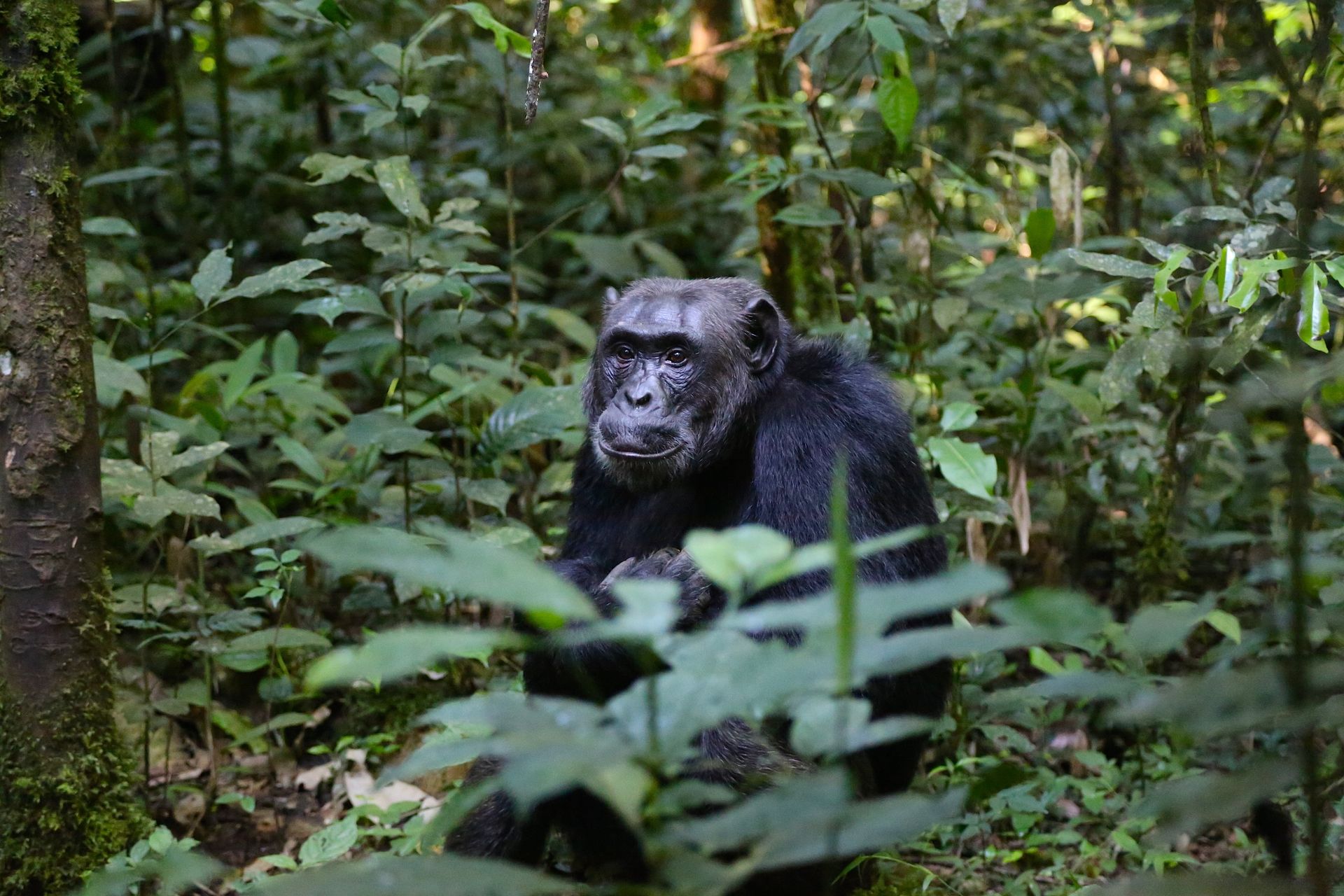
Kibale is Uganda’s primate capital — chimpanzee tracking, forest birds, and the quiet intensity of moving through a rainforest that is fully alive. A safari here is best understood through its setting, rhythm and the kind of traveller it rewards. It may be a headline wildlife area, a specialist extension or a quieter pause between bigger safari chapters, but it has a clear role when chosen for the right reason.
.jpg)
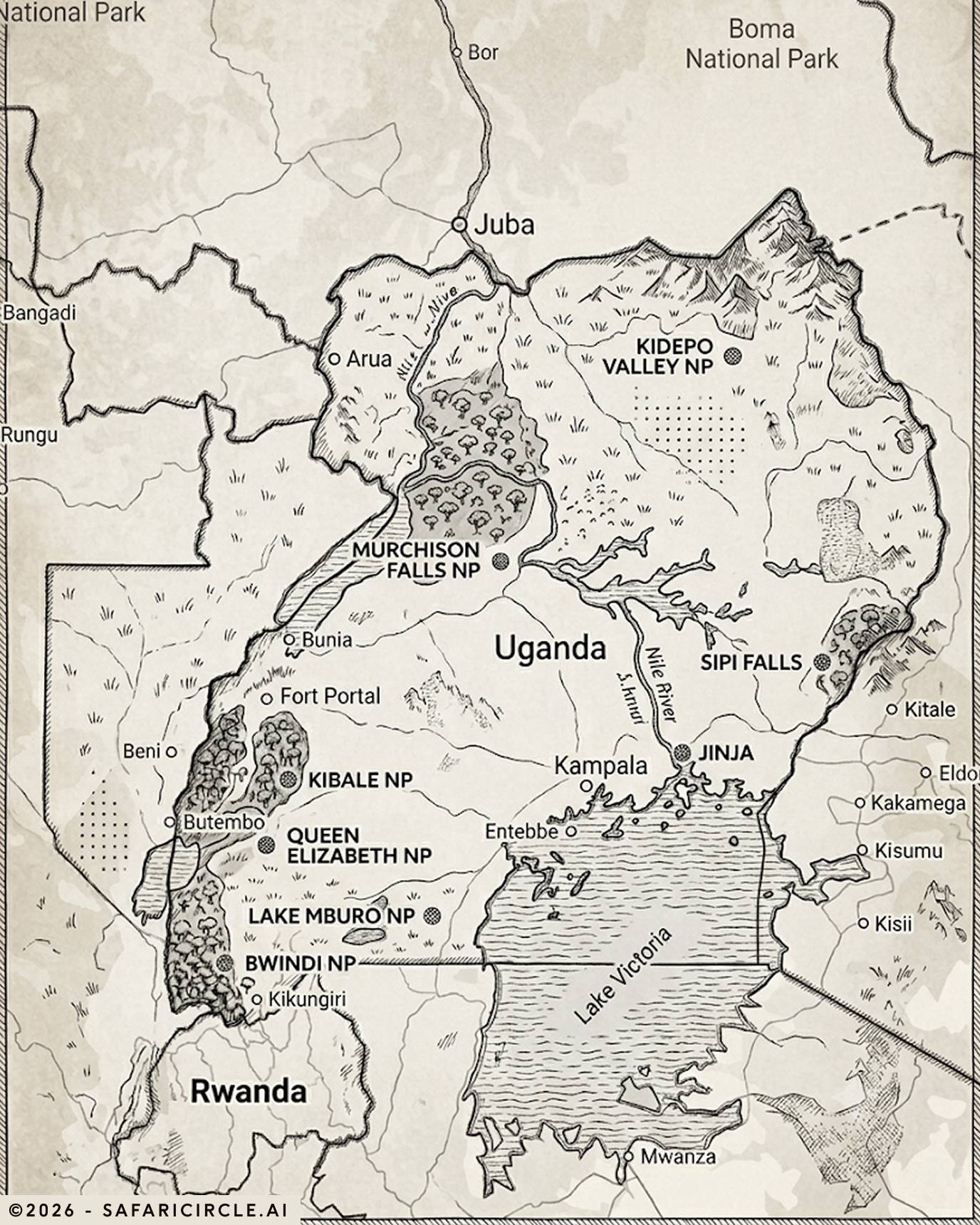
Kanyanchu area
This is the main chimpanzee tracking hub, with rainforest trails and high primate diversity.
Bigodi Wetland
Bigodi adds birding, community context and a softer walk through swamp forest and village-edge habitat.
Forest corridor
The wider Kibale corridor connects rainforest, tea country and crater lakes, giving the area a richer itinerary role.
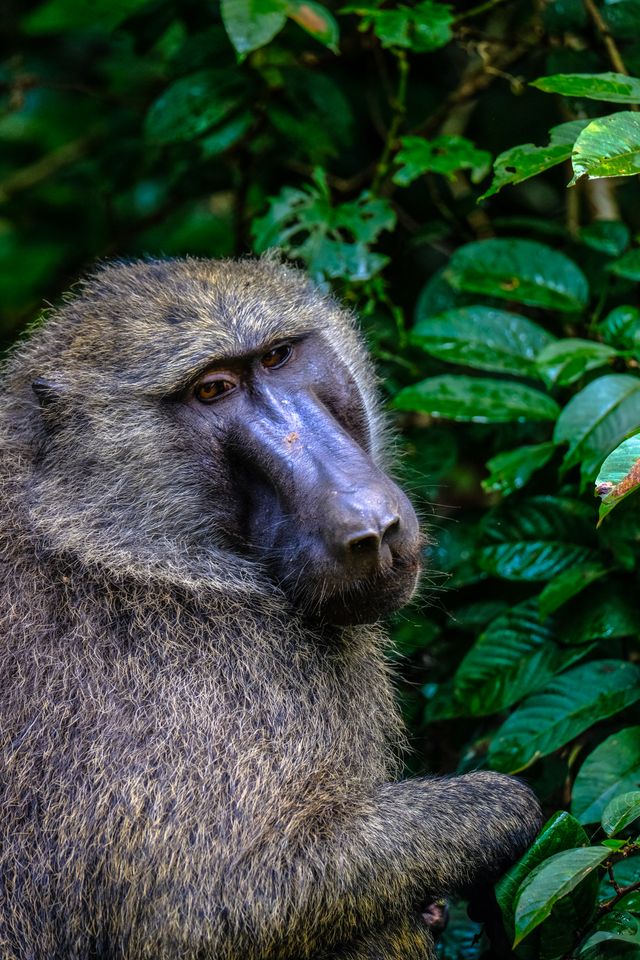
Kibale is exceptional for chimpanzees and other primates, including red colobus, black-and-white colobus and L’Hoest’s monkey, plus superb forest birdlife.
Uganda sits on the equator and is a year-round destination. Gorilla permits are available every day. Two dry seasons shape the calendar.
June to September is the primary dry season and the best window for gorilla trekking — trails are less muddy, the forest floor is firmer, and trekking times tend to be shorter. This is also peak season for Murchison Falls and Queen Elizabeth.
December to February is the secondary dry season. Gorilla trekking is excellent, and savannah game viewing is strong. February is the most underrated month — fewer visitors than July–August, good conditions across all parks, and gorilla permits are easier to secure.
March to May brings the heaviest rain. Some roads become difficult, and gorilla treks are harder. But green-season rates drop, birding is at its peak (Uganda has over 1,000 bird species), and the landscape is lush.
For UK families: July–August school holidays align with the primary dry season. October half-term falls in a shoulder period — conditions are variable but permits are more available. Easter sits in the wet season and is less reliable.

Lodges are shaped by forest, primate trekking and scenic movement, ranging from comfortable bases to high-end retreats where location and access are the real luxury.
The strongest Kibale Forest lodges are recognised for how well they interpret the landscape, not only for comfort. In practice, the most meaningful acclaim comes from excellent guiding, sensitive design, conservation credibility and the ability to make this specific place feel coherent to travellers.
Kibale Forest suits travellers who want wildlife encounters with emotional weight, especially when primates, forests or conservation stories are central to the trip.
It also works for couples and thoughtful first-timers who prefer fewer, deeper experiences over a checklist-style safari.
Families with older children can enjoy it when the pacing, trekking requirements and transfer times are planned carefully.
From the UK, travellers usually fly to Entebbe, then continue by road or domestic flight depending on the park and trip length.
Uganda routes can involve long but scenic drives, so the best itineraries balance wildlife ambition with realistic pacing.
Most travellers should allow at least three nights if Kibale Forest is the main safari focus. Two nights can work as part of a wider route, but three gives enough time for different light, weather and wildlife patterns to emerge.
The best timing depends on the main reason for going. Dry months usually improve wildlife visibility in many safari areas, while green season can bring softer light, fewer visitors, birdlife and a more atmospheric landscape.
Kibale Forest can work for a first safari if its strengths match the traveller. It is important to choose it for the right reasons, rather than expecting every destination to deliver the same kind of wildlife density or lodge style.
The best lodge is usually the one with the strongest location, guiding and rhythm for the experience you want. Price and polish matter, but they should not outrank access, seasonality and how the lodge uses its surrounding landscape.
Yes, but the combination needs to preserve safari time rather than simply look interesting on a map. The best pairings are those with practical transfers and a clear contrast in wildlife, landscape or activity style.
The main trade-off is expectation management. Kibale Forest has a clear role, but it may not deliver every safari priority at once. A good itinerary leans into what the area does best instead of forcing it to behave like somewhere else.


As an independent partner of 360 Private Travel, eligible flight-inclusive holidays booked through us are financially protected by 360 Private Travel Ltd under the UK ATOL scheme, ATOL number 7514. 360 Private Travel Ltd is also IATA accredited under IATA number 91200056.
Qualifying flight-inclusive holidays are financially protected under the UK ATOL scheme, where applicable. You will receive an ATOL Certificate confirming the protection covering your individual booking.



.png)