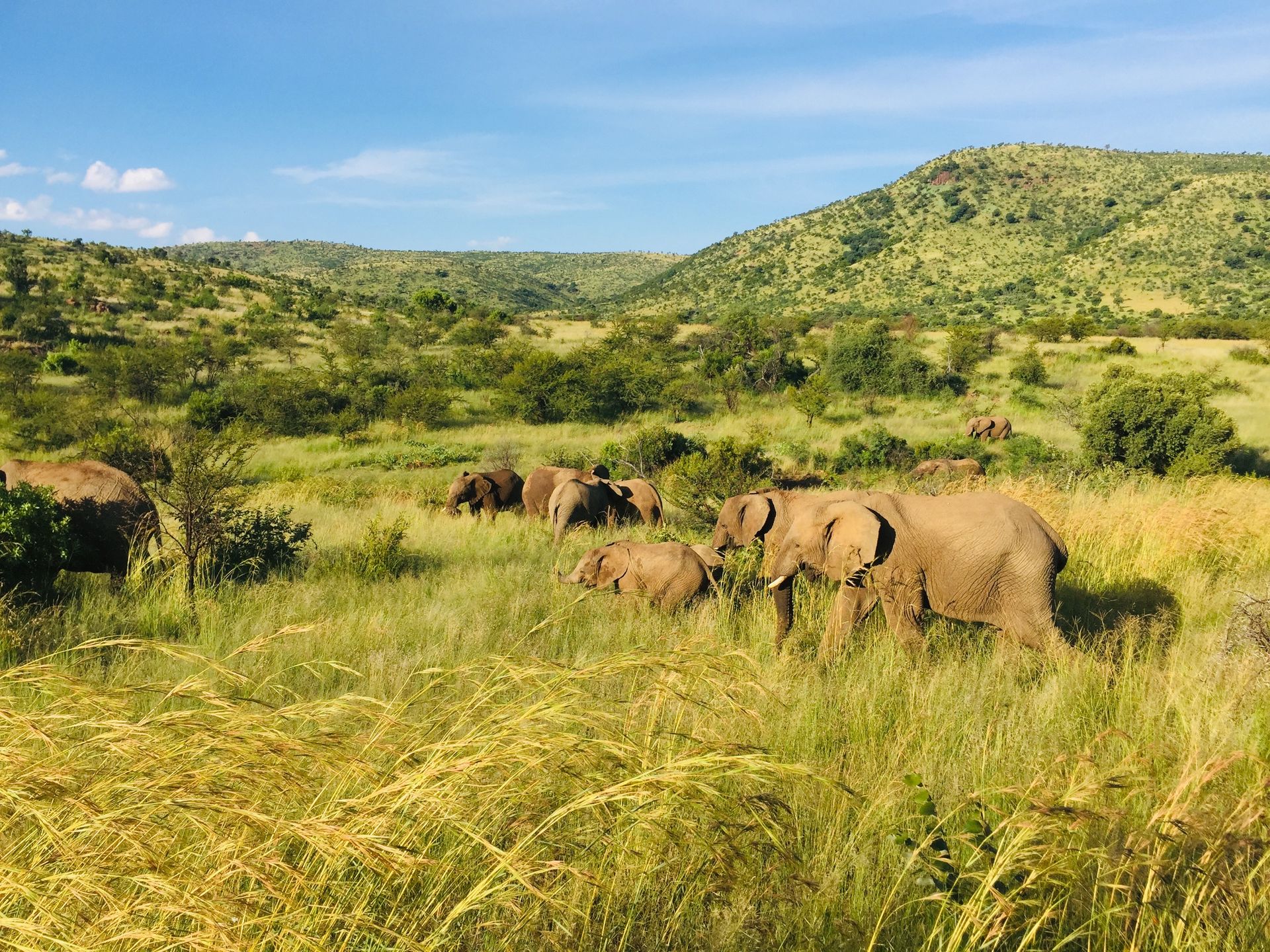
Black Rhino Game Reserve sits within the wider Pilanesberg ecosystem, giving travellers a malaria-free Big Five safari within reach of Johannesburg. It is not as wild as Kruger’s private reserves, but it offers strong accessibility, comfortable lodges and a practical safari choice for families or short South Africa trips.
Black Rhino Game Reserve
Black Rhino is a private reserve on the north-western side of Pilanesberg, with limited lodge access and a quieter atmosphere than the busier public sections. It is the best fit for travellers wanting privacy without complicated logistics.
Pilanesberg National Park
The wider Pilanesberg landscape is set inside an ancient volcanic crater, creating varied habitats, scenic hills and good general game viewing. Wildlife is fenced and managed, but the Big Five are present across the ecosystem.
Johannesburg and Sun City Access
The reserve’s accessibility is central to its appeal. It can work as a short safari before or after Johannesburg, the Cape, or a family holiday that includes Sun City, without needing a long fly-in transfer.
Wildlife in the Pilanesberg and Black Rhino ecosystem can include lion, elephant, rhino, buffalo, leopard, giraffe, zebra and plains game. Sightings are generally good, especially for a short accessible safari, though the experience is more managed and less remote than Greater Kruger or Madikwe.
South Africa’s seasons are the reverse of the UK’s. The dry winter (May–September) delivers the best game viewing as vegetation thins, animals gather at water and temperatures are comfortable during the day but cold on early drives. May to August is the most underrated window for the Sabi Sands — winter light is exceptional for photography, rates are lower than December peak and animal concentrations around water are at their highest.
October to April brings lush landscapes, newborn animals, and superb birding. The Sabi Sands and Phinda work year-round. Tswalu’s pangolin and aardvark sightings peak in the cooler winter months when these nocturnal species emerge during daylight.
For UK families:December–January falls in South Africa’s peak summer — hot, green, and busy.October half-term and Easter align with shoulder seasons offering good value.

Black Rhino lodges are not usually the headline award winners of South African safari, but they are valued for a different reason: malaria-free access, Big Five potential and private-reserve comfort close to Johannesburg. For many families, that practicality is the accolade.
Black Rhino suits families, first-time safari travellers and time-poor guests who want a malaria-free safari with easy access.
It works well for multi-generational groups because the journey is relatively simple and lodges are generally comfortable and practical.
It is less suited to safari purists looking for unfenced wilderness, elite guiding depth or the most reliable leopard viewing in South Africa.
From the UK, travellers usually fly directly or via Europe into Johannesburg OR Tambo International Airport.
Black Rhino is normally reached by road transfer from Johannesburg, making it one of South Africa’s more accessible safari options.
It combines easily with Johannesburg, Sun City, the Cape or a wider South Africa itinerary without needing light aircraft logistics.
Yes. Black Rhino and the wider Pilanesberg area are generally treated as malaria-free, which is one reason they are popular with families and multi-generational groups. Travellers should still take normal health advice before travelling.
Black Rhino is usually reached by road from Johannesburg, making it much easier to access than many fly-in safari areas. Exact driving time depends on traffic, lodge location and transfer routing.
The wider Pilanesberg ecosystem supports the Big Five, and Black Rhino offers good safari potential for a short accessible reserve. Sightings are never guaranteed, and leopard can be less reliable than in reserves such as Sabi Sands.
Two or three nights is usually enough for a short safari. Three nights gives a better rhythm and more game drives, especially for families or first-timers who do not want the experience to feel rushed.
It depends on the brief. Black Rhino is easier, malaria-free and practical for short trips, while Greater Kruger generally offers a deeper, wilder and more prestigious safari experience. Convenience is Black Rhino’s main advantage.
Yes, it can be a strong family choice because access is simple, malaria risk is low and lodges are generally comfortable. The best lodge depends on children’s ages, private vehicle needs and how flexible the safari schedule should be.

Some of the flights and flight-inclusive holidays booked with Safari Circle are financially protected by the ATOL scheme. If you don’t receive an ATOL certificate, the booking will not be ATOL protected. In the unlikely event of our insolvency, the Civil Aviation Authority (CAA) would ensure that you’re not stranded abroad. They will also arrange to refund any funds you have already paid us towards your booking. You can verify our ATOL status on the Civil Aviation Authority website. Please note, we operate as independent partners to Major Travel (ATOL 2933)
ABTA act as a trade association (both commercial & regulatory) for travel agents and tour operators in the UK. As independent partners to Major Travel, all of our bookings at Safari Circle that contain hotels, tours or car hire but do not include international flights are protected under Major Travel’s ABTA Bond. In the unlikely event of an unresolved dispute between you as a passenger and us/Major Travel, you can use the ABTA arbitration service as an alternative to legal action. You can verify our ABTA number (Y6455, P7169) on the ABTA website.
.png)

