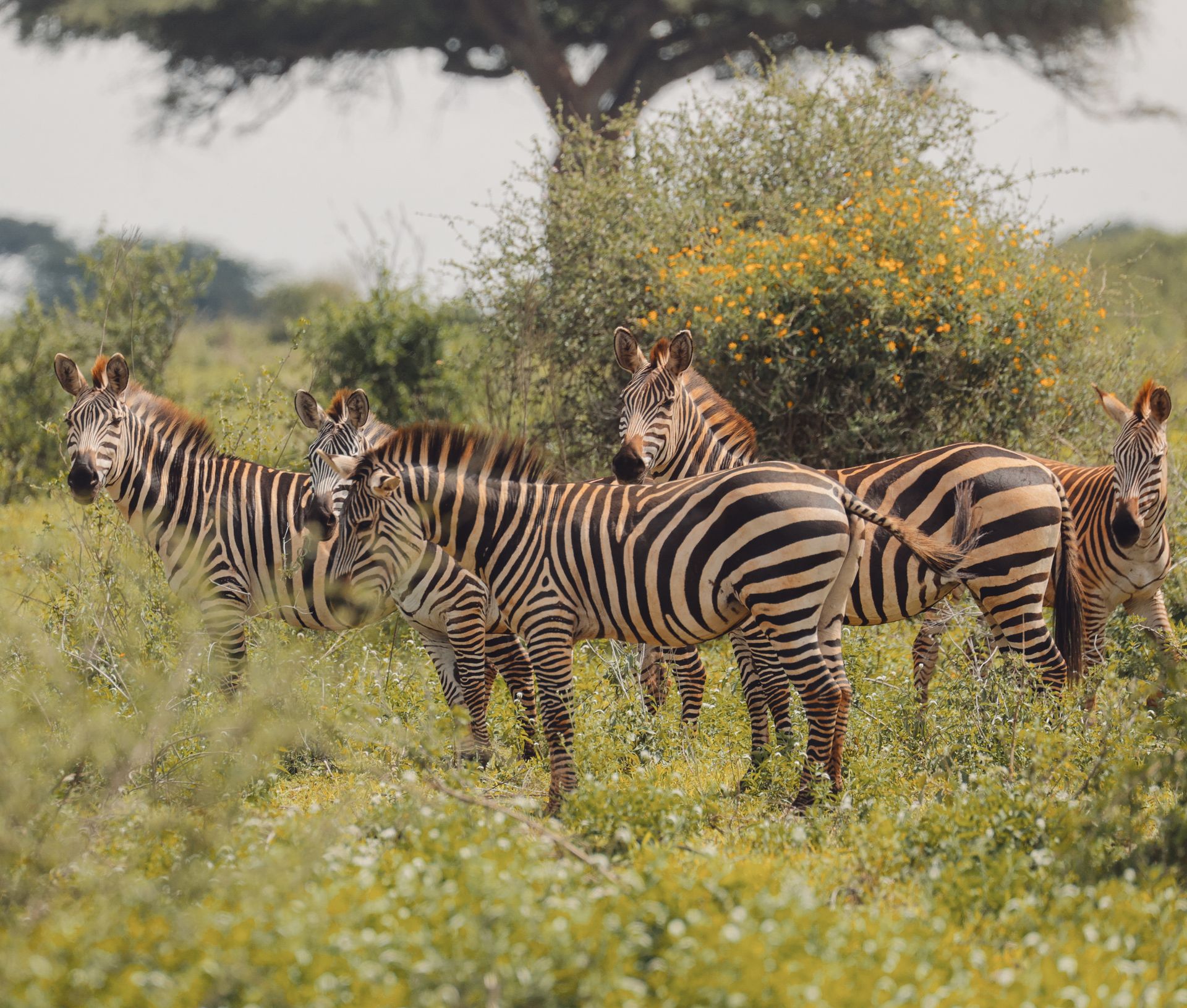
Katavi National Park is remote western Tanzania at its most uncompromising: vast floodplains, seasonal rivers, buffalo herds, hippo pools and very few other travellers. It is not easy to reach, but that difficulty protects the feeling of being somewhere genuinely separate from the main safari circuit.
Chada floodplain
The Chada floodplain is Katavi’s signature stage, opening wide in the dry season as buffalo, antelope and predators concentrate around shrinking water. It gives the park its scale: huge skies, distant dust and wildlife moving through an unusually empty landscape.
Katuma River and seasonal pools
The Katuma River system and associated pools become increasingly important as the dry season deepens. Hippos crowd into remaining water, crocodiles lie in wait, and the drama becomes less polished than famous parks but often more raw.
Remote woodland and miombo edges
Beyond the floodplains, Katavi’s woodland and miombo fringes create quieter game-viewing country. These zones reward patience, guiding and repeat drives, especially for travellers interested in tracking, smaller details and the feeling of a whole ecosystem beyond the obvious sightings.
Katavi is known for buffalo herds, elephant, lion, hippo, crocodile, roan, sable, giraffe and strong dry-season concentrations around the floodplains and river systems. It is not a Big Five box-ticking destination in the conventional sense; its appeal is scale, solitude and the intensity that builds when water becomes scarce.
Tanzania works year-round, but the answer depends on which region you visit and what you want to see.
June to October is peak dry season. Vegetation thins, animals cluster around water, and the northern Serengeti delivers its most dramatic wildlife as herds cross into Kenya's Mara. Prices are highest and the best camps book 6–12 months ahead.
January to March is the most underrated window. The southern Serengeti calving season brings intense predator action, the light is extraordinary for photography and visitor numbers are much lower than the peak.
Late March to May brings green landscapes and lower rates, but some camps close entirely as this is the rainy season. November and early December offer a sweet spot: short rains, calving herds returning south, and competitive pricing.
For UK families: July–August aligns with peak northern Serengeti migration. October half-term catches the tail end. Easter falls in the variable rain period and Tarangire and Ngorongoro are more reliable than the Serengeti in April.

Lodges in Katavi are few, small and expeditionary by Tanzanian standards. Expect intimate tented camps, simple luxury, serious guiding and a stronger emphasis on wilderness access than spa-style comfort. The best properties feel deliberately close to the land, with limited distractions from the park itself.
Katavi is acclaimed less through mainstream travel awards and more through the admiration of experienced safari travellers and specialist operators. Its reputation rests on rarity: one of East Africa’s least visited major wildlife parks, offering a level of solitude that famous northern destinations can no longer promise.
For the right traveller, that scarcity is the accolade. Katavi’s best camps are valued because they make a difficult wilderness feel possible without sanding away its remoteness, which is exactly why the park remains so compelling.
Katavi is best for repeat safari travellers, pioneers, photographers and wilderness purists who value solitude as much as sightings. It is for people who would rather see fewer vehicles than more polished infrastructure.
It can be superb for couples or friends who want a private, expeditionary feel, but it is usually too remote and logistically demanding for a casual first safari.
Families should approach Katavi carefully. Older teenagers with a strong wildlife interest may find it extraordinary, while younger children may struggle with the remoteness, heat, limited activities and transfer demands.
From the UK, travellers usually fly into Dar es Salaam, Kilimanjaro or Arusha, then continue by scheduled or charter light aircraft into western Tanzania.
Katavi is not normally reached by road on a luxury safari. Flight schedules can be limited, seasonal and often shared with other remote western parks, so itineraries need careful planning and realistic pacing.
It combines particularly well with Mahale Mountains for chimp trekking and Lake Tanganyika, creating one of Tanzania’s strongest remote wilderness-and-forest safari pairings.
Three nights is the practical minimum, but four nights is stronger if Katavi is the main reason for travelling. The journey is significant, and the park rewards time for weather, water levels and wildlife movements to reveal themselves.
The dry season, roughly June to October, is usually the strongest period, especially as wildlife gathers around remaining water. Late dry season can be particularly dramatic, although heat and dust are part of the experience.
Usually not as a standalone first safari. Katavi is better for travellers who already understand safari rhythm and actively want remoteness. First-timers can include it if paired with a more classic anchor such as the Serengeti.
Katavi has very few lodges, and the best options are small, tented and wilderness-led. Expect serious safari atmosphere rather than a broad choice of styles, large pools or highly polished resort facilities.
Yes. Katavi and Mahale form one of Tanzania’s great remote pairings: floodplain big-game safari followed by chimp trekking and Lake Tanganyika. The combination is specialist and flight-led, but experientially very strong.
The main trade-off is convenience. Katavi gives rare solitude and scale, but getting there takes commitment and budget. It is a poor choice for travellers who want easy logistics, wide lodge choice or a highly predictable first safari.


As an independent partner of 360 Private Travel, eligible flight-inclusive holidays booked through us are financially protected by 360 Private Travel Ltd under the UK ATOL scheme, ATOL number 7514. 360 Private Travel Ltd is also IATA accredited under IATA number 91200056.
Qualifying flight-inclusive holidays are financially protected under the UK ATOL scheme, where applicable. You will receive an ATOL Certificate confirming the protection covering your individual booking.



.png)

